
Reading, PA · Garage Door Service
Keeping Garage Doors Running Through Reading's Cold Months
Garage door maintenance for Reading, PA homes built 1938-2003, cold-climate opener and spring upkeep from Reading Garage Door Pros, serving nearby towns.
- Repairs & new doors
- Springs & openers
- Serving 8 nearby communities
Why This Fails Locally
Most of the garage doors we get called out on sit in houses built between 1938 and 2003, with the median landing around 1970 and the bulk of the stock going up in the 1960s and 70s. That matters because doors and openers from that build window were sized and sprung for a different set of expectations than what's sold today. Steel sections without foam insulation, extension springs mounted on bare rails, openers with chain drives and no soft-stop - none of it was wrong when it went in, but none of it was built to run maintenance-free for fifty years either.
Then there's the climate. This area sits in a cold band the federal data flags as severe, and cold is hard on garage door hardware in ways that aren't obvious until something snaps. Lubricant that's fine in September turns gummy by January. Metal contracts, which tightens tolerances on rollers and hinges that were already a little worn. A torsion spring loses a measurable amount of lift capacity in deep cold, so a door that closed fine in August starts hanging up or slamming the last six inches in February.
Across the 58 named communities this area covers, the housing stock skews the same way - same era, same hardware assumptions, same cold months doing the same slow damage. That's not a coincidence. It's why maintenance calls cluster the way they do.
What the Fix Involves
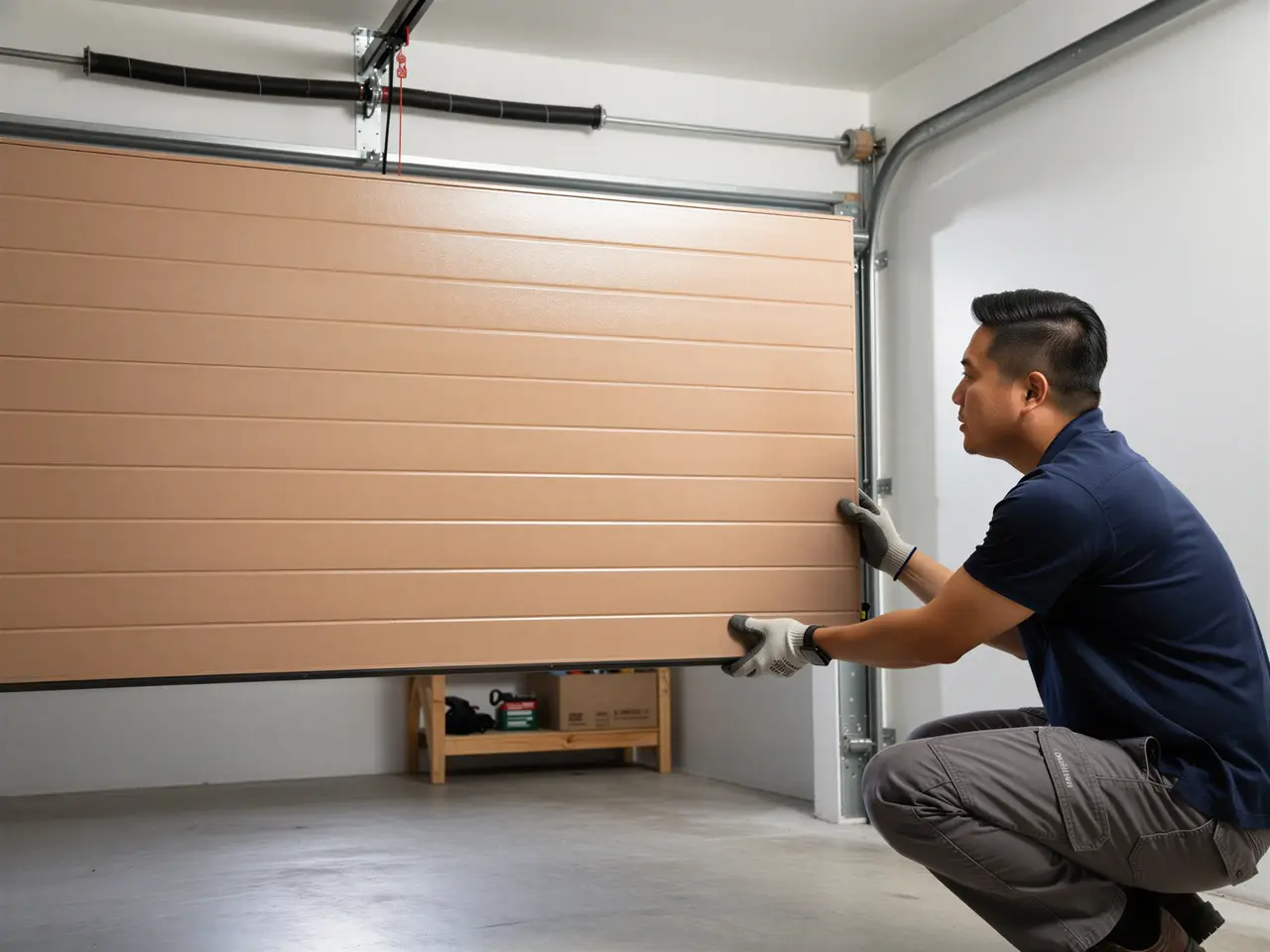
A real maintenance visit isn't a quick squirt of oil and a wave goodbye - if that's what you got last time, you got shorted. The work starts at the track: checking alignment, looking for the kind of wear that shows up as a scraped or shiny patch where a roller's been riding off-center. Rollers and hinges get checked for play and cracking, not just lubricated over the top of the problem.
Spring tension gets checked and adjusted if the door's drifting out of balance - a door that doesn't hold position halfway up is telling you the spring is losing lift, which happens faster in cold weather on hardware that's already a few decades old. Cables get a visual check for fraying at the drum, since a cable failure under tension is one of the few garage door problems that can actually hurt someone.
On the opener side: force and limit settings get checked against what the door actually weighs now, not what it weighed on install day, and the safety reversal sensors get tested. Weatherstripping at the bottom and sides gets checked too, since a cracked seal on a cold-rated door lets in drafts and moisture that make every other part work harder.
With 36,624 owner-occupied houses in this area carrying hardware that was never touched after installation, this is the kind of visit that catches a spring before it breaks instead of after.
The DIY Question
Some of this you can do yourself. Wiping down tracks, checking that the photo-eye sensors are aligned and clean, listening for new grinding or squealing - none of that needs a truck. If you want to lubricate moving parts yourself, use a silicone or lithium-based lubricant rated for cold temperatures, not household oil, which thins out and attracts grit.
What you shouldn't touch is the torsion spring. It's under enough stored tension to cause a serious injury if it lets go while you're working on it, and the tools to adjust it safely aren't something most garages have lying around. Cable replacement carries the same risk, since the spring has to come off tension first.
Here's the honest limitation: if your opener is more than a decade or two old and the circuit board is failing, we may not have a part for it on the shelf. Older opener models get discontinued, and sourcing a control board for something from the 80s or 90s can take longer than anyone wants to wait - sometimes that's the point where replacement makes more sense than repair. We'll tell you straight when that's the case instead of running the clock on a part that might not show up.
A median household income around $85,952 in this area generally covers a maintenance call without much debate. It's the spring and cable work that's worth leaving to someone who does it every day.
How It Shows Up
The first sign is usually weight, not noise. A door that used to lift with one hand suddenly needs both, or the opener starts straining on the way up and stuttering on the way down. That's a spring losing tension, and in houses built in that 1938-2003 window, it's almost always original or near-original hardware doing the losing.
Next comes the noise - a grinding or popping sound as a roller catches on a track that's gone slightly out of alignment, which happens more in winter as cold tightens every joint by a fraction. Some owners notice the door reversing partway down for no clear reason; that's often a sensor that's gotten dirty or knocked out of alignment, not a safety fault, but it's worth checking before it becomes one.
Across the towns this service area covers - from Wyomissing two miles out to Halfway House fifteen miles southeast - the pattern repeats because the housing wave repeats. A door that's fine in October and sluggish by January isn't a coincidence of weather. It's cold-rated steel and aging lift hardware meeting a severe winter at the same time every year, in the same kind of garage, built in the same stretch of decades.
Frequently asked questions
How often should I get my garage door serviced in a climate like this?
Once a year, ideally before the cold sets in, is the general rule we work from here. Given the severe winter band this area sits in, hardware that's drifted out of balance over the summer tends to show it fast once temperatures drop, so catching it in fall beats catching it in January.
Why does my garage door feel heavier to lift every winter?
Cold weather reduces how much lift a torsion spring can deliver, and houses in this area mostly carry original or decades-old spring hardware from the 1960s-70s building wave. A door that lifted easily in summer and feels like dead weight in January is almost always a spring losing tension, not the opener failing.
Is it worth repairing an old opener instead of replacing it?
Sometimes, but not always. If the circuit board is the failing part on an older model, sourcing a replacement can take longer than most homeowners want to wait, since those boards get discontinued. We'll look at what's actually broken before recommending either option.
Do you cover maintenance for towns outside Reading itself?
This service area runs across dozens of nearby communities, from places a couple miles out like Wyomissing and Hyde Park to towns ten-plus miles away like Fleetwood and Adamstown. The housing and climate factors behind most maintenance calls are consistent across that whole area.
Related services
By Neighborhood
Maintenance across the Reading area
We also handle maintenance in these Reading-area suburbs.
Book garage door service in Reading
Call now or request a quote - tell us what the door is doing and where you are.