
Reading, PA · Garage Door Service
Garage Door Maintenance for Pottstown's Older Housing Stock
Pottstown's garages mostly date to 1948, a generation older than the rest of our service area. We cover maintenance here from Reading, 16 miles out.
- Repairs & new doors
- Springs & openers
- Serving 8 nearby communities
Why This Fails Locally
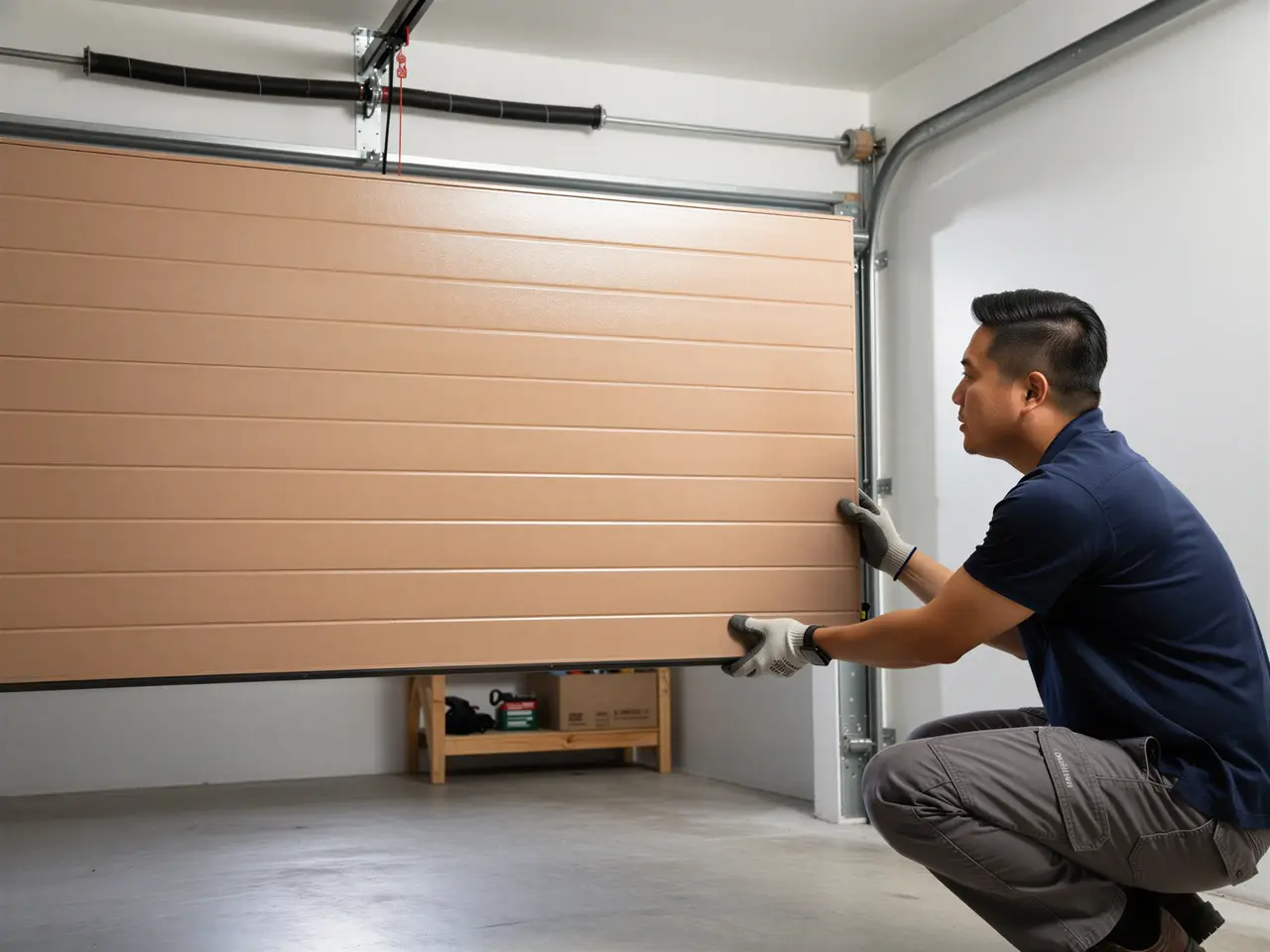
Pottstown's housing stock carries a median build year of 1948, a full generation older than the 1970 median across the rest of the service area we cover out of Reading. A lot of the original garages here are narrow, single-bay structures framed in wood, built for a car half the width of what people park in them now. Somewhere along the way most of these got a steel sectional door hung on that original wood jamb, and that mismatch is the root of a lot of the calls we get from this side of the county.
Wood framing moves. It shrinks, swells with the seasons, and after seventy-some years it's rarely still square. A sectional door wants a plumb, tight jamb to track against. When the jamb has drifted even a little, the track pulls away from the wall on one side, rollers bind, and the door starts fighting you every time it moves. That's not a hardware defect. That's a 1948 garage doing what wood framing does over three-quarters of a century, and no amount of lubricant fixes a jamb that's out of plane.
We're not guessing at this from a brochure. It's the pattern we see on this side of the service area more than anywhere closer to Reading itself, and it's why maintenance here starts with the frame, not the door.
Parts We Carry
For routine maintenance we carry the parts that wear out on any sectional door regardless of age: rollers, hinges, cables, and weatherstripping rated for a cold climate, since this whole service area sits in a severe cold band and winter is what finds the weak point in old hardware first. Lubricant we use is chosen for that cold, not the general-purpose stuff that stiffens up at 20 degrees.
What we don't carry on the truck is matching panel sections for the older, narrower doors still hanging on some of Pottstown's 1948-era garages. Those panel styles aren't made anymore, and if a section is cracked or dented beyond a patch, we're looking at a lead time to source something close, or a conversation about whether a full replacement makes more sense than chasing a discontinued match. That's the honest limitation: maintenance keeps an old door running, it doesn't manufacture parts that stopped being made decades ago.
For the newer retrofit hardware bolted onto those original frames, stock parts usually fit fine. It's really the structural side - the jamb, the track mounting - that needs the custom attention, and that's done on site, not off a parts shelf.
How to Book
We run maintenance visits to Pottstown from our Reading base, about 16 miles out, so these jobs get scheduled rather than worked same-day the way an emergency call closer to Reading might be. If you're booking a maintenance visit here, plan on picking a window rather than expecting someone within the hour - that's the honest tradeoff of being one of the farther stops on the route.
You can set up a visit through our Pottstown service page, which covers what we do on this side of the area beyond just maintenance. If you're looking at a broader rundown of maintenance service across the whole Reading area, that's covered on the Reading maintenance page instead - this page is specifically about what maintenance looks like on Pottstown's older housing stock.
We'd rather schedule it properly and show up with the right lubricant and the right eye for a 1948 jamb than rush a visit and miss the actual problem.
What the Fix Involves
A maintenance visit on one of Pottstown's older doors starts with the frame before it touches the door itself - checking the jamb for plumb, since that's where the trouble usually starts on housing stock from this era. From there it's a full run: rollers out and inspected for flat spots, hinges checked for play, cables checked for fraying near the drum, and the track re-seated and shimmed if it's pulled away from the wall.
Spring tension gets checked with the cold in mind. In a severe cold climate, torsion springs lose a little tension as temperatures drop, and a spring that's borderline in summer can leave a door feeling heavy by January. We adjust for that rather than waiting for a call about a door that won't lift.
Weatherstripping gets replaced if it's cracked, since on these older single-bay garages the seal is doing double duty keeping out both weather and whatever draft comes through a frame that's shifted over the decades. Last step is lubrication at every pivot point, with the cold-rated grease we carry for this climate band, not the summer stuff that gums up in a Pottstown January.
How It Shows Up
The most common complaint we hear from this part of the service area is a door that groans or drags on the coldest mornings, then seems fine again by afternoon. That's the combination of a severe cold climate and a jamb that's not quite square anymore - the track tolerance that's tight enough to work when everything's at room temperature gets tighter still when metal contracts in the cold.
Other signs: a door that visibly pulls to one side as it travels, daylight showing at a corner that didn't used to show it, or a grinding sound right at the point where the track meets the original wood frame. On a newer build in a squarer garage, that same sound would usually point straight at a roller. Here, it's worth checking the frame first.
Some owners also notice the opener straining harder than it used to, which often isn't the opener at all - it's a spring that's lost tension with the season, or a track fighting a jamb that's moved. Treating the opener as the problem usually just delays the real fix.
The Complications
Pottstown's median household income, $56,174, sits well under the $85,952 average across the roughly 89,740 households in our wider service area, and it shows up in how long doors here stay in service. Owners tend to keep repairing and maintaining rather than replacing, which is a reasonable call most of the time - but it means more of our visits here involve hardware from two or three different eras stacked on the same door, since a retrofit opener or a replaced section from the 1990s doesn't always talk nicely to 1948 framing.
With around 9,638 households in Pottstown, a meaningful share of that stock is still on original wood jambs, and wood framing that old sometimes has soft spots or minor rot where hardware needs to be remounted. We can shim and reinforce a jamb; we can't rebuild a rotted one on a maintenance visit, and if we find that, the honest answer is a carpentry referral before we touch the door again.
The other complication is simply distance - at 16 miles out, we can't offer the same turnaround on a follow-up visit that we'd offer closer to Reading, so we try to catch everything in one pass.
Frequently asked questions
Why does my garage door feel so much heavier in winter?
In a severe cold climate like this one, torsion springs lose a bit of tension as temperatures drop. If your spring was already near the low end of its range, cold weather is often what finally makes the door feel noticeably heavy. We check and adjust tension as part of a maintenance visit.
Can you match the panel on my older door if one section cracks?
Sometimes, but not always. Many of Pottstown's garages still run door styles that stopped being manufactured years ago. If a panel can't be sourced, we'll tell you straight and talk through whether a partial match or a full replacement makes more sense.
Do you have a crew based in Pottstown?
No. We work Pottstown from our Reading base, about 16 miles out, so maintenance visits here are scheduled rather than same-day. We'd rather set a proper appointment and bring the right parts than rush it.
Is it the door or the frame causing the drag?
On a lot of Pottstown's 1948-era garages, it's the frame. Wood jambs shift over decades, and a track that's pulled even slightly off the wall will drag a door regardless of how new the rollers are. We check the frame before assuming it's a door part.
More garage door services in Pottstown
Book garage door service in Reading
Call now or request a quote - tell us what the door is doing and where you are.