
Reading, PA · Garage Door Service
Garage Door Maintenance for Laureldale's Older Single-Bay Garages
Maintenance built around what Laureldale's garages actually are: 1954-era single bays, older torsion hardware, and steel doors that have outlasted their springs by decades.
- Repairs & new doors
- Springs & openers
- Serving 8 nearby communities
What It Costs
Before you get to a number, you need to know what you're maintaining. Laureldale's housing stock centers on a median build year of 1954 - two decades older than the 1970 median across the rest of the Reading service area. That means a lot of garages here are single bays, built for one car, with openings often under eight feet wide. The doors on them are usually steel, sometimes with the original torsion or extension spring hardware still hanging on the header, because nobody's replaced it since the house was framed.
What drives the cost of a maintenance visit isn't the town, it's what's behind the door. A 1954-era single door with an extension spring setup gets inspected differently than a newer two-car door on torsion springs - different lubrication points, different hardware to check for wear, different rollers to pull and look at. We don't have a flat number to quote you here without seeing the door, and we're not going to make one up. What we can tell you is that the older the hardware, the more likely a maintenance visit turns up something that needs more than a tune-up - a spring near the end of its cycle count, a track that's been rusting behind a panel for years.
Time on the Job
A single-bay door with original hardware takes longer to go through properly than a modern two-car door, even though it's smaller. There's more to check by hand - extension springs don't have the same cycle-count math as torsion springs, so the inspection leans on wear signs instead of a number. Hinges on a 1954-built door have usually been painted over more than once, which means more time scraping before you can even see the condition of the metal underneath.
We come out from Reading, four miles up the road, so the drive itself isn't the time sink here - the door is. If the opener was added later, which is common on houses this age, that's a second system bolted onto hardware it wasn't designed around, and that adds its own check to the visit. We're not going to pretend every garage in town takes the same amount of time. The honest answer is: it depends on what's actually on the door, and we won't know until we're standing in front of it.
How to Book
Maintenance in Laureldale gets scheduled the same way as anywhere else on the route - through the Reading shop, four miles out. There's no separate crew or drop-off point in town; the same truck that covers the rest of the service area covers this one. You can book through the site or give us a call, and we'll ask what you know about the door - age, whether it's original to the house, whether an opener was added later - because that tells us what to bring before we show up.
If you're not sure how old your door is, that's fine. A lot of homeowners here inherited the house along with whatever's in the garage. We'd rather ask a few questions up front than guess on the truck.
What the Fix Involves
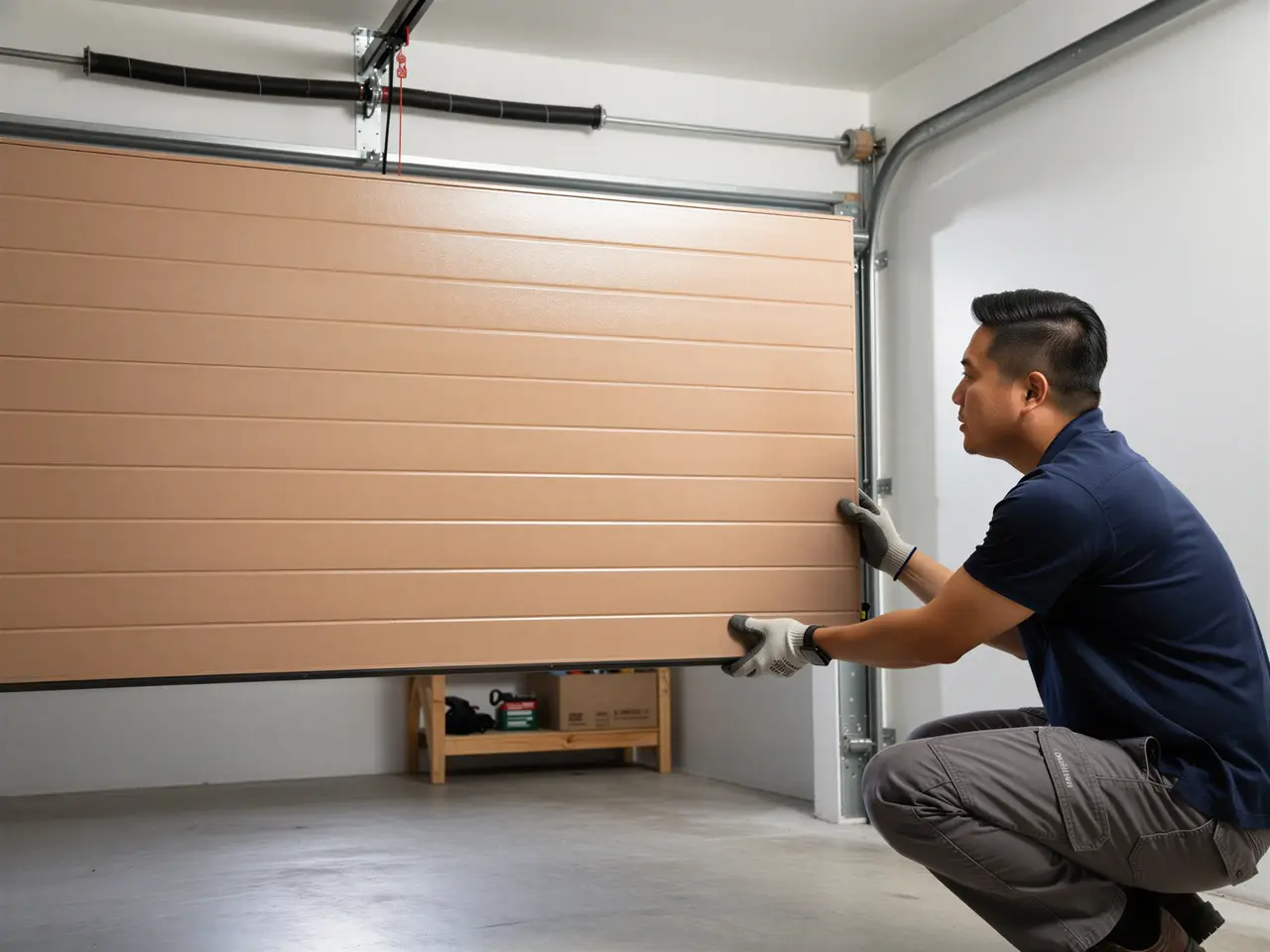
On a 1954-era single door, maintenance usually means pulling the panels for a look at the back side, where rust starts first in a climate that runs cold and sees real winter weather. We check the spring - torsion or extension, whichever is on the door - for flat spots, rust pitting, and gap in the coils, since that's where a sudden failure starts. Rollers get checked for cracking, which happens faster on steel wheels that have been running dry for years than on the nylon ones that came later.
Track alignment matters more on narrower single-bay openings, because there's less tolerance for drift before the door starts binding on one side. We lubricate hinges, rollers, and the spring itself, and we check the cable for fraying near the drum. What we don't do as part of a maintenance visit is replace a spring that's already failing - that's a repair, and we'll tell you straight if that's what you're looking at instead of a tune-up.
How It Shows Up
The first sign on an older single-bay door is usually noise - a grinding or popping that wasn't there a year ago, which on a 1954-built door often means a roller that's worn through its coating and is running steel on steel. The second sign is the door hanging crooked when it's partway open, which points to a spring that's lost tension unevenly or a cable that's started to slip off the drum.
Because a lot of these garages only have one door and one car, homeowners notice problems faster than they would in a two-car household where the second bay sits unused for weeks. If your door has started hesitating before it closes, or the opener strains audibly on the way up, that's usually the hardware telling you it's near the end of what a maintenance visit can fix on its own.
The DIY Question
There's plenty here a homeowner can do between visits - wiping down the tracks, checking that the photo-eye sensors aren't blocked, listening for new noises. What we don't recommend touching yourself is the spring, torsion or extension, on a door this old. The hardware on a 1954-built garage has usually been through enough tension cycles that nobody can tell you from the outside how much life is left in it, and a spring letting go under load is not a minor injury risk.
If your garage is one of the smaller single-bay setups common in Laureldale, lubrication is worth doing yourself every few months - a basic silicone spray on hinges and rollers, not grease, which attracts grit. Beyond that, call it in. At a median household income of $64,792 in town, we understand the instinct to handle it yourself rather than pay for a visit, but a spring job gone wrong costs more than the maintenance call would have.
Frequently asked questions
Is my garage door too old to maintain, or does it need replacing?
If the door is original to a 1954-built house and still has its first spring and rollers, maintenance can extend it, but we'll tell you honestly if the hardware's past the point where a tune-up helps. A door with a track that's rusted through or a frame that's warped is a replacement conversation, not a maintenance one.
How often should a single-bay garage door get serviced?
We don't have a fixed interval that fits every door, since it depends on the hardware and how much the door gets used. An older torsion or extension spring setup benefits from more frequent checks than newer hardware, because wear on it is harder to spot from the outside.
Do you have a branch in Laureldale?
No. The Reading shop covers Laureldale and the rest of the surrounding area; it's about a four-mile drive from there to here. There's no separate depot in town - the same truck and crew handle the whole route.
Will an opener added later cause problems with an older door?
It can. A lot of houses this age had an opener bolted onto a door and spring system that predates it, and the opener's force settings sometimes don't match what the original hardware was built to handle. That mismatch is one of the things we check during a maintenance visit.
More garage door services in Laureldale
Book garage door service in Reading
Call now or request a quote - tell us what the door is doing and where you are.