
Reading, PA · Garage Door Service
Garage Door Repair for Reading's Older Housing Stock
Reading homes built mostly in the 1960s and 70s on torsion hardware that wasn't made for today's cold snaps. We fix springs, openers, and tracks fast.
- Repairs & new doors
- Springs & openers
- Serving 8 nearby communities
Why This Fails Locally
Most of the houses we get called to in Reading went up between 1938 and 2003, with the bulk of that stock dating to the 1960s and 70s. That matters because the torsion springs, tracks, and hinge hardware sold in that era weren't built for the duty cycle a modern household puts on a door - multiple cars, remote openers added on later, and decades of freeze-thaw cycles working on steel that's now 50 to 60 years old.
Reading sits in a cold-severe climate band, and that's the other half of the problem. Cold steel contracts. A torsion spring that's been wound to spec for 1970 tolerances loses flexibility faster when it's cycling through hard winters year after year. Add rollers that were never swapped out, and you get the classic Reading failure: a door that worked fine in October and won't lift in January.
This isn't unique to one street. Across the 58 named areas in our service territory, the pattern repeats because the housing boom here happened in the same narrow window, using the same hardware generation. A door failing on a 1968 colonial in one neighborhood looks almost identical to one failing a few miles over near Shillington or Laureldale.
What the Fix Involves
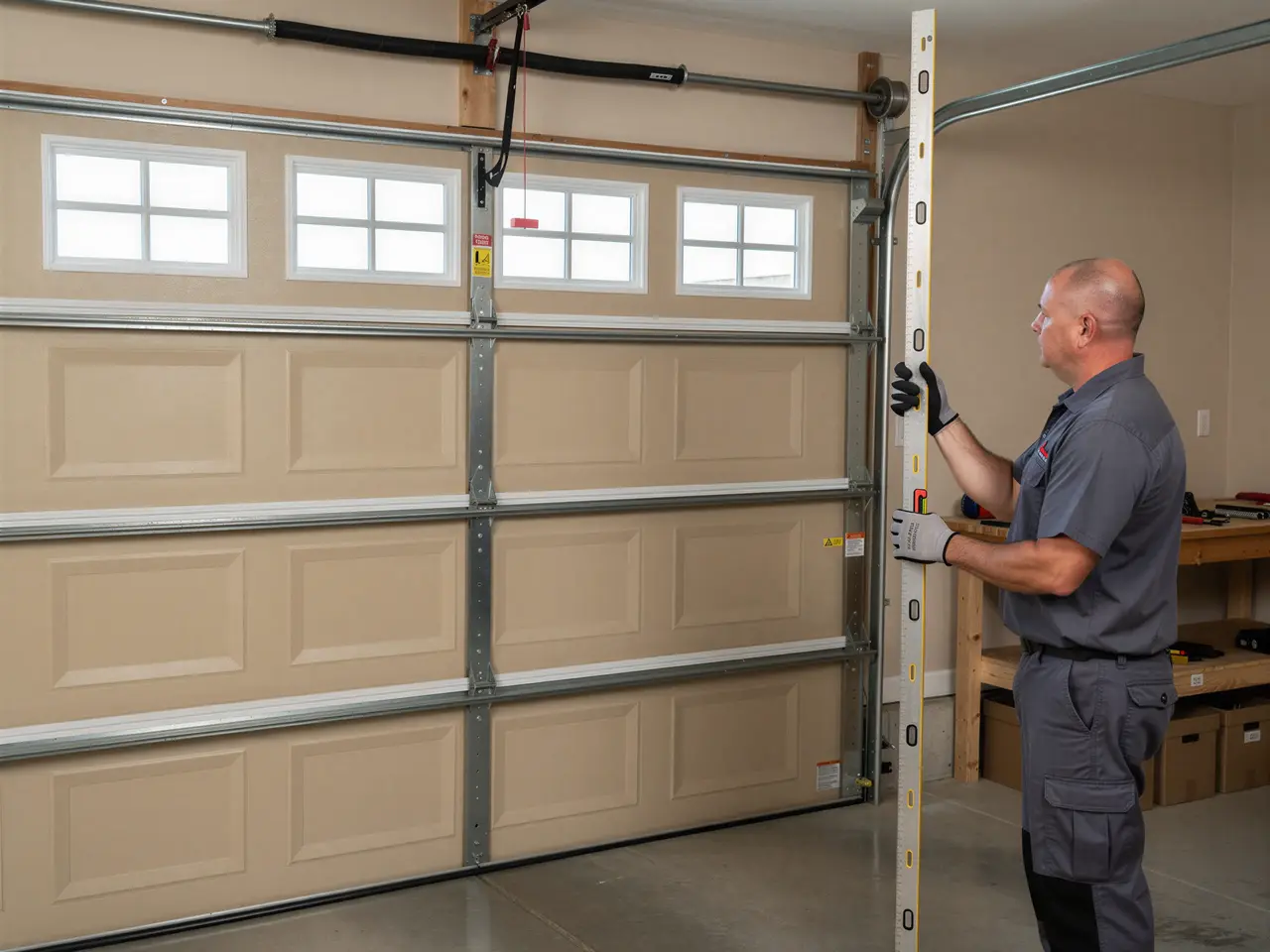
For a door of this vintage, the job is rarely just "replace the spring." We check the drum, the cable wind, and the track alignment together, because hardware from the 1960s-70s era was often matched as a set - swap one piece without checking the rest and you've got a door that lifts unevenly or binds in the track within a season.
On torsion systems original to houses built before the 1980s, we also look at the bearing plate and the header bracket. Wood framing from that period has usually settled some over 50-plus years, and a bracket that's pulled even an eighth of an inch out of square will chew through a new spring faster than it should.
Cold-climate wear shows up in the opener too. Gear-driven openers from that housing wave weren't built with the lubricant tolerances we expect now, so a motor that's straining in January cold is often a lubrication and gear issue, not a dead motor. We check that before we quote a replacement.
We don't push a full door replacement unless the panels themselves are cracked or rusted through. If the hardware's the problem and the door's sound, we fix the hardware.
The DIY Question
A lot of Reading homeowners ask if they can just swap the spring themselves. Here's the honest answer: a torsion spring under load can take a finger or worse, and on hardware this old, the bearing and drum wear is often invisible until you've got the spring off and the door's already sagging unevenly on one cable. We've been called out more than once to finish a job that started as a DIY spring swap on an older door.
What you can check yourself: the weatherstripping at the bottom panel, whether the door reverses properly when it hits resistance, and whether the tracks have visible rust or bowing. Those are safe to look at and worth knowing before you call anyone.
What we don't recommend doing yourself on a house built before the 1980s: anything involving the torsion spring, the cable drums, or the header bracket. The failure mode on old hardware isn't gradual - it's a sudden snap, and on a door this heavy, that's not a repair you want to learn on.
How It Shows Up
On houses in this housing-stock window, the first sign is usually the door hesitating partway up, or the opener motor running longer than it used to before the door moves. That's the spring losing tension, not the motor failing.
The second sign, especially after a hard cold stretch, is a loud bang from the garage - that's often a cable or spring finally giving out on hardware that was already fatigued. By the time it bangs, the door won't open at all, and it needs same-visit parts, not a diagnosis-only call.
A third pattern we see across this income band of household - median income here runs well above $85,000, and a lot of owners have already put money into one upgrade (insulated panels, a newer opener) without touching the original spring and track hardware underneath. That mismatch, new opener straining against old springs, shows up as grinding or a door that opens crooked. It's common enough in Reading's owner-occupied houses that we check for it on almost every repair call.
Frequently asked questions
Why do garage doors in Reading fail more in winter?
Most homes here were built in the 1960s-70s window, and Reading sits in a cold-severe climate band. Torsion springs and cables from that era get stiffer and more fatigue-prone in hard cold, so a spring that was marginal in fall often snaps outright after a cold stretch.
Is it worth replacing the whole door or just fixing the spring?
If the panels are sound and it's a hardware issue, we fix the hardware - spring, cable, track. We only recommend full replacement when the panels themselves are cracked, rusted through, or the door is structurally out of square, which is more common on the oldest homes in the 1938-1950s range.
How old does my opener need to be before it's a lubrication issue vs. a dead motor?
Gear-driven openers from the older housing stock era often strain in cold weather because of lubricant tolerances, not motor failure. We check gear lubrication and the spring balance before quoting a motor replacement - a lot of what looks like a dead opener is really the door fighting bad spring tension.
Related services
Related guides
By Neighborhood
Garage Door Repair across the Reading area
We also handle garage door repair in these Reading-area suburbs.
Book garage door service in Reading
Call now or request a quote - tell us what the door is doing and where you are.