
Reading, PA · Garage Door Service
Why Safety Sensors Drift on Reading Garage Doors
Reading homes built 1938-2003 sit on slabs that move with COLD-band freeze-thaw cycles. Here's why that knocks safety sensors out of alignment and what to check first.
- Repairs & new doors
- Springs & openers
- Serving 8 nearby communities
What to Look At First
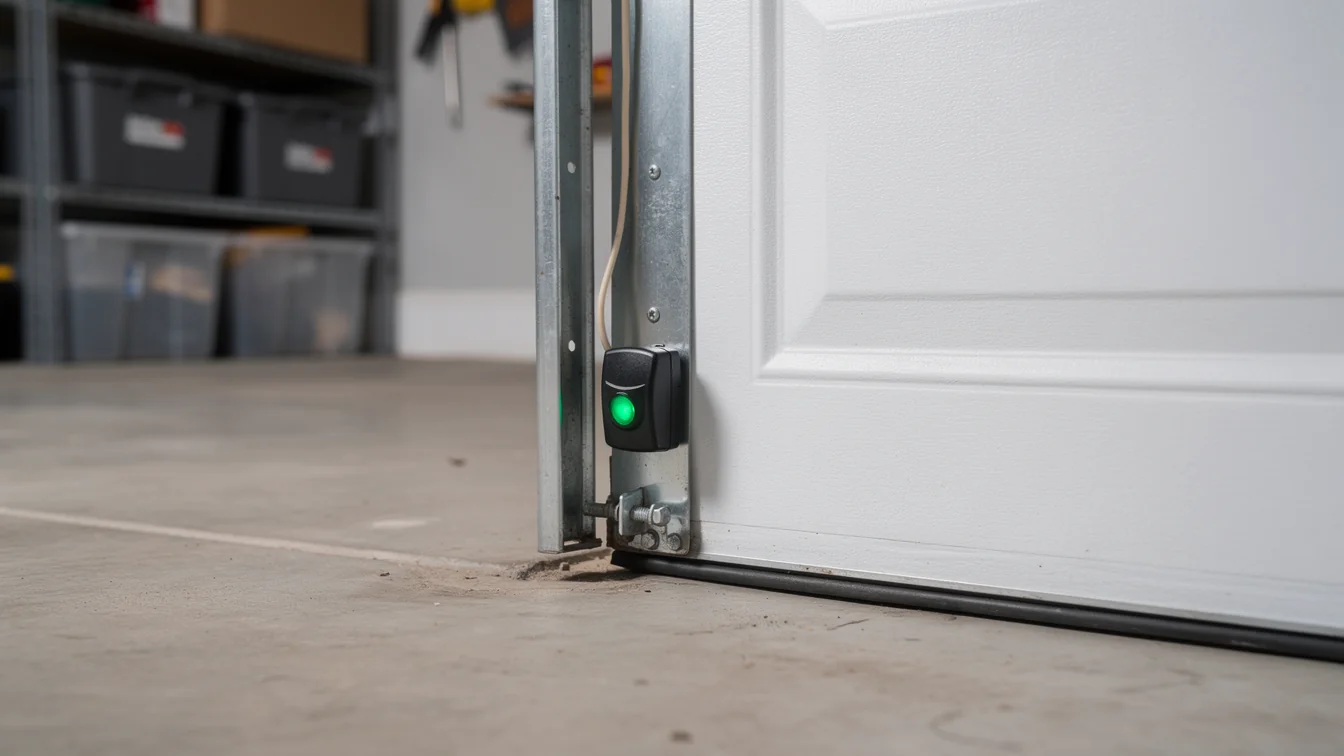
Start at the bottom of the track, not the sensor eyes themselves. On a lot of Reading houses, especially the stock built in the 1960s and 70s that makes up most of the 58 named areas around here, the sensor brackets got bolted straight to the track rather than to an independent post. That means if the track shifts even an eighth of an inch, the sensor aims off-center and the door starts refusing to close, or it closes and reverses for no visible reason.
Check the two LED eyes, one on each side of the door near the floor. They should both glow steady. A blinking light on either side means the beam is broken or misaligned, not necessarily that the sensor itself is bad. Wipe the lenses first; garage floors here collect enough grit and winter salt residue that a dirty lens reads the same as a misaligned one. If cleaning doesn't fix it, look at whether the bracket has bent or the track has pulled away from the jamb, which on older slabs is common.
Don't skip the obvious: a stored bike, a trash can, even a shadow from a parked car can trip the beam. Rule that out before you touch any hardware.
The Situation
Reading's housing stock runs 1938 to 2003 with a median around 1970, so a large share of the garages in this service area were built before anyone was thinking about photo-eye sensors at all - they got added later, often as a retrofit onto hardware that was never designed for them. That retrofit is where the drift starts. The bracket is usually a thin L-piece screwed into whatever stud or track edge was handy at the time, not engineered for 50 years of seasonal movement.
Add to that a COLD severe climate band, and you get slabs and jambs that expand and contract every winter. A garage floor that heaves even slightly during a hard freeze-thaw cycle tilts the track a few degrees, and a few degrees at floor level is enough to walk the sensor beam off target. This isn't a one-time fix in a house built in 1965 - it's a recurring one, because the ground keeps moving every year the same way it moved last year.
Homes built after the 1990s, closer to the newer end of our 1938-2003 range, tend to have sensors mounted on separate vertical posts rather than the track itself, so they hold alignment better. If your house falls on the older end of that range, expect to recheck alignment more than once a season.
When to Get Help
Call someone when you've cleaned the lenses, confirmed nothing is blocking the beam, and the door still won't close or still reverses partway down. At that point you're either dealing with a bent bracket, a track that's pulled loose from the wall, or a sensor unit that's failed internally - and none of those are something to force past by jumping the circuit, which some homeowners try and which defeats the whole purpose of the sensor being there.
We don't recommend DIY realignment on doors where the bracket is welded or riveted to the track rather than bolted, which shows up on some of the older 1960s and 70s installs in this area. Bending that bracket back by hand usually just moves the misalignment instead of fixing it, and it can crack the mounting point, which then needs full replacement instead of a quick adjustment.
One honest limit here: if the sensor wiring itself has degraded - brittle insulation, corroded leads - that's often a sign the whole unit is past its service life, and replacing the sensor pair outright is cheaper and more reliable than chasing an intermittent fault wire by wire.
What Local Conditions Do
The freeze-thaw pattern that comes with a COLD severe climate band is the biggest single driver of sensor drift we see across this service area, from the closer-in neighborhoods like Hyde Park and Wyomissing out to Shillington and St. Lawrence. Concrete doesn't move much in a single season, but it moves every season, and a garage slab poured decades ago has had plenty of cycles to settle unevenly at the door opening specifically, since that's where the slab has an edge instead of being locked in on all sides.
Houses on the older end of the 1938-2003 range are more likely to have had sensors added after original construction, mounted to whatever was convenient rather than to a fixed, independent post. That combination - an older retrofit bracket plus decades of slab movement under a harsh winter climate - is why sensor alignment issues show up here as a recurring maintenance item rather than a one-time repair, more so than it would in a region with milder winters or newer housing stock across the board.
Frequently asked questions
Why does my garage door sensor light blink only in winter?
Cold-weather slab movement is the usual cause. As the ground freezes and thaws through a COLD severe winter, the slab under your door track shifts slightly, which tilts the sensor bracket enough to break the beam alignment. Cleaning the lens won't fix this one - the bracket or track position needs to be reset.
Can I just disconnect the sensors if they keep failing?
You can, but we don't recommend it. The sensors exist to stop the door from closing on something in its path. Bypassing them removes that protection entirely. If they keep drifting, the fix is a better bracket or mount, not removing the safety feature.
Is sensor drift worse in older Reading houses?
Generally yes. Houses from the older end of our area's 1938-2003 build range often had sensors retrofitted onto the track itself rather than a separate post, so any track movement throws off alignment directly. Newer builds tend to have sensors on independent mounts that hold position better.
Related garage door services in Reading
More garage door guides
Book garage door service in Reading
Call now or request a quote - tell us what the door is doing and where you are.