
Reading, PA · Garage Door Service
Garage Door Maintenance for Exeter's Newer Housing Stock
Exeter homes mostly went up after 1985, later than much of the Reading area. Steel sectional doors and torsion hardware need a different maintenance check here.
- Repairs & new doors
- Springs & openers
- Serving 8 nearby communities
How It Shows Up
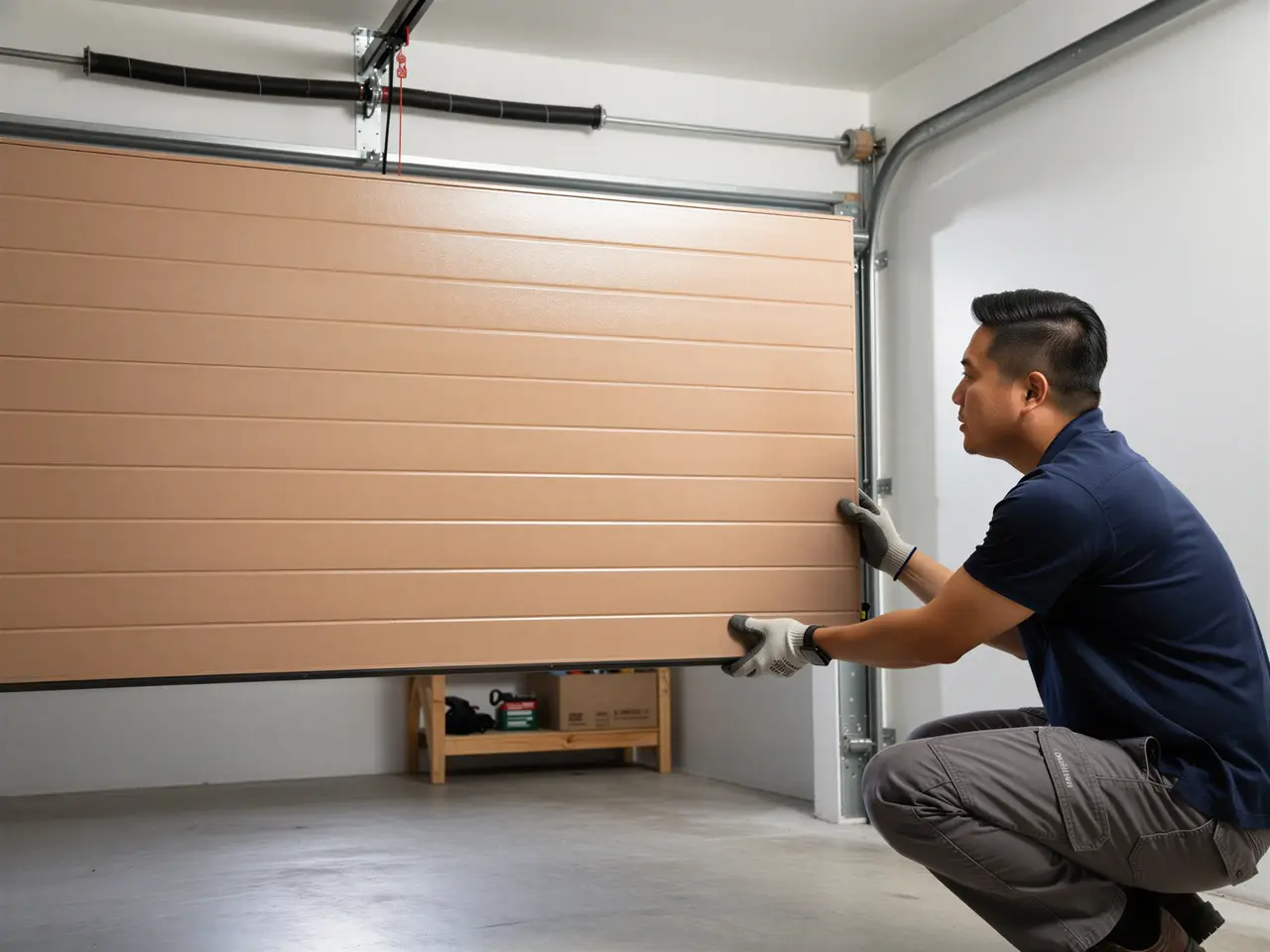
Exeter's houses are younger than a lot of what we see closer into Reading. The median build year here is 1985, well past the 1970 median for the wider service area, so most garages were built with steel sectional doors from the start, not the older wood or one-piece panel doors common in the oldest neighborhoods we cover. That means standard 16x7 or 9x7 steel sections, galvanized steel tracks, and torsion spring systems mounted over the opening rather than the side-mounted extension setups you find on older houses.
Because the doors are newer, the first signs of wear aren't rust-through panels or warped wood - they're hardware fatigue. Rollers that have done 30-plus years of cycles start binding in the track. Torsion springs rated for a certain cycle count reach the end of that count and snap, usually without warning, usually on a cold morning when the steel has tightened up. The door itself is often still structurally fine. It's the moving parts underneath it that are due.
The Complications
This part of the service area sits in a climate band we treat as cold-severe, and torsion springs lose a measurable amount of lift capacity in sub-freezing air. A spring that's been quietly weakening for a couple of winters can hold through summer and then let go the first hard-freeze week. On a 1985-era door, that spring has usually never been touched - it was wound once at installation and never inspected since.
Lubrication breaks down the same way. Factory grease on rollers and hinges thickens in cold weather, which is exactly when owners need the door to open without a fight before work. We also see track alignment drift on these doors: 30-plus years of seasonal concrete shift under the slab nudges the vertical track a few degrees off plumb, which doesn't look like much until a roller starts chewing through the track wall. None of this is dramatic. It's slow, and it's why maintenance visits catch it before a spring failure does.
Why This Fails Locally
Exeter households report a median income of $96,936, noticeably above the broader Reading-area median, and that shows up in what we're asked to do here: more owners choose to maintain and extend the life of a door that's basically sound rather than replace it the first time something squeaks. That's a reasonable call on a steel door from the 1980s - the panels usually outlast the hardware by decades if the hardware gets attention.
Where this goes wrong is when nobody checks the spring cycle count or the cable condition until the door won't lift. At that point you're not scheduling a maintenance visit, you're calling for an emergency spring replacement, and the job costs more and happens on a worse day. With roughly 9,437 households in Exeter and a housing stock that's largely the same age, a lot of these doors are approaching the same hardware lifespan window at close to the same time.
Parts We Carry
For 1985-era steel sectional doors we carry standard torsion springs sized for 16x7 and 9x7 openings, galvanized steel rollers, lift cables, and the hinge sets that match factory spacing on doors from this build era. We don't stock parts for the older wood panel doors or the side-mounted extension spring systems you'd find on pre-1960 houses, since that's not what's common on this side of our coverage.
One limit worth being straight about: if a spring has already broken and taken a cable or a track section with it, we won't always have every replacement part on the truck the same day - some track hardware is sized to the specific door model and needs an order. A standard maintenance visit, by contrast, is usually a same-visit job: inspect spring tension, check cable fray, lubricate rollers and hinges, and re-level the track if it's drifted. We travel out from Reading, about 5 miles to reach Exeter, so there's no local branch here - just the truck and the parts it's carrying.
Frequently asked questions
How often should a garage door this age get serviced?
On a steel sectional door from the mid-1980s, an annual check of spring tension, cable condition, and roller wear is reasonable. Most of these doors have never had the torsion spring inspected since installation, and cold-weather cycle fatigue is the main thing that catches owners off guard here.
Is my door's spring original to the house?
If your home was built around 1985 and the door hasn't been replaced, it's possible. Torsion springs are rated for a cycle count, not a calendar date, so a spring that age is well past typical rated life and worth having checked before it fails on its own.
Do you keep parts on hand for older wood doors?
Not routinely for this area. Exeter's housing stock is mostly post-1985 steel sectional doors, so our stock is built around that hardware - standard torsion springs, galvanized rollers, and matching cable sets, not the older wood panel or side-mount extension systems.
Why does the door get stiff in winter?
Cold temperatures thicken factory lubricant on rollers and hinges and reduce torsion spring lift capacity, which this area's cold-severe winters bring on every year. It's usually not a sign the door is failing, but a spring already near the end of its cycle life is more likely to snap in that weather.
Book garage door service in Reading
Call now or request a quote - tell us what the door is doing and where you are.