
Reading, PA · Garage Door Service
Garage Door Repair for Laureldale Homes
Laureldale homes mostly date to 1954, and at a median income of $64,792 the repair-or-replace math here is tighter than in newer parts of the Reading area.
- Repairs & new doors
- Springs & openers
- Serving 8 nearby communities
What It Costs
Laureldale's median household income is $64,792, which is noticeably below the $85,952 median across the wider Reading service area. That gap matters when you're staring at a quote. On a torsion spring or a cable snap, repair almost always makes sense here - those jobs are a fraction of a new door. Where it gets harder is a door that's cracked, rotted at the bottom panel, or running on an opener that's given out twice in two years. On a home at Laureldale's income level, we'll tell you straight if a full replacement is going to strain the budget for no real gain, and we'll say so even when a bigger job pays us more. If the track is straight, the springs are the right weight for the door, and the panels are sound, fixing it is almost always the right call. We don't pad an estimate to make replacement look better - if repair holds up, we say repair.
Parts cost is the other half of the math. Older torsion and extension hardware sized for a 1950s door isn't always sitting on a shelf at the big box store, which can shift a repair estimate up a bit compared to a newer build. We'll tell you that cost before we start, not after.
Time on the Job
A straightforward spring or cable repair on a Laureldale door usually runs under two hours once we're on site. Panel replacement or opener swaps take longer, mostly because of parts matching - a door built to 1954 dimensions or hung on older track doesn't always take a modern off-the-shelf panel without some fitting. We travel from Reading, about 4 miles out, so the drive itself isn't the bottleneck. The time sink, when there is one, is sourcing a part that matches hardware this age rather than the labor itself.
How to Book
Call or use the booking link below. Tell us the age of the house if you know it and what the door is doing - won't open, opener runs but door doesn't move, spring looks snapped, that kind of detail. It helps us bring the right spring weight and track hardware on the first trip instead of a second one. We work Laureldale as part of the Reading service area, so we're not running a local branch out of town, but the distance doesn't change what we bring or how we price the job.
What the Fix Involves
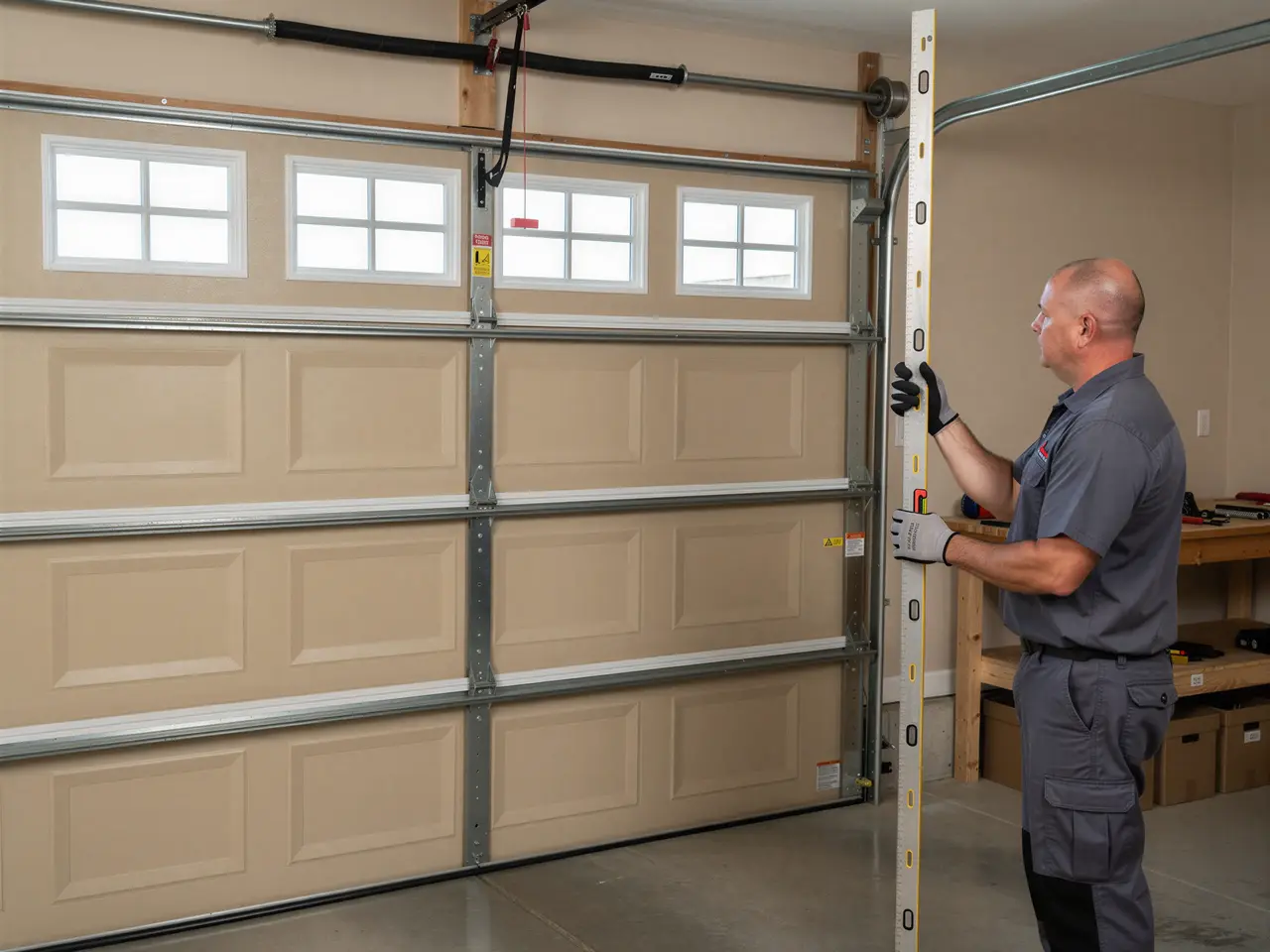
With a median year built of 1954, a lot of Laureldale garage doors are either original replacements from decades back or doors swapped once in the 70s or 80s onto older track. That means torsion or extension spring hardware that predates the lighter, mass-produced setups common in houses built after 1980. The fix usually starts with checking whether the track is still square - on a door this age, decades of settling can throw the alignment off even if the spring itself looks fine. We check rollers and hinges for wear next, since original hardware on a 1954-era door has had a long run. If the opener is newer than the door, which is common, we check that the mounting and force settings actually match the door's weight rather than assuming factory defaults are right.
How It Shows Up
The region sits in a cold, severe winter climate band, and that shows up in specific ways on older doors. Cold makes torsion springs stiffer to cycle and extension springs more likely to snap on a cold morning open. On a door built or replaced in the 1954-to-1970s window common here, weatherstripping has usually failed at the bottom panel, letting in enough cold air that homeowners notice it before they notice the hardware wear causing it. A door that used to lift smooth and now groans or hesitates on a cold start is often a spring losing tension, not an opener problem - though people usually blame the opener first.
The DIY Question
Tightening loose hardware, lubricating hinges and rollers, and checking weatherstripping are fine to do yourself. Springs are not. A torsion spring under tension on an older 1954-era door setup can cause real injury if it lets go while you're working on it, and the hardware on doors this age doesn't always match what's shown in online repair videos, which are usually filmed on newer doors. If you're not sure whether what you're looking at is a spring, a cable, or a track problem, that's the one call worth making before you touch anything.
Frequently asked questions
Is it worth repairing an old garage door in Laureldale instead of replacing it?
Usually yes, if the track and panels are sound. With a median income of $64,792 here, most households come out ahead fixing a spring or cable rather than replacing the whole door, since replacement only pays off when the panels or track are actually damaged, not just old.
Why does my door act up more in winter?
This area sits in a cold, severe winter climate band. Cold stiffens torsion springs and raises the odds an aging extension spring snaps on a cold start. On older Laureldale doors, worn weatherstripping often makes the cold air issue more noticeable than the hardware wear actually causing it.
Do you have a branch in Laureldale?
No. We work Laureldale as part of the Reading service area, about 4 miles out. There's no separate depot here, but the drive doesn't change our pricing or what we bring to the job.
How old is the hardware on a typical Laureldale garage door?
The median year built here is 1954, so a lot of doors are running on original or once-replaced torsion and extension spring hardware from that era, which doesn't always match parts stocked for newer doors.
More garage door services in Laureldale
Book garage door service in Reading
Call now or request a quote - tell us what the door is doing and where you are.