
Reading, PA · Garage Door Service
Garage Door Repair for Gilbertsville, PA Homes
Most Gilbertsville homes went up after 1982, newer than much of Reading's older stock, so doors and openers fail differently. Reading crews drive 17 miles here.
- Repairs & new doors
- Springs & openers
- Serving 8 nearby communities
What It Costs
The first number that matters here isn't a price list, it's income. Gilbertsville's median household income is $117,426, well above the $85,952 median across the wider Reading area we cover. That gap changes the math on repair versus replace. A lot of the doors in this pocket are coming up on 40-plus years old since most houses here were built after 1982, which is a decade or more newer than the 1938 to 1970 stock that defines the older neighborhoods closer to Reading. When a torsion spring goes on a door that age, a straight repair still makes sense. When the opener, the track, and the bottom panel are all showing their age at once, owners at this income level tend to replace rather than keep feeding parts into an old unit. We don't carry a fixed price for either path in writing here, because what a job actually needs depends on what's on the door when we get there. What we can say is that the decision point shows up earlier in Gilbertsville than it does in neighborhoods built decades before 1982, simply because the housing stock itself is younger and the owners here are less likely to want three repairs spread over two years.
The DIY Question
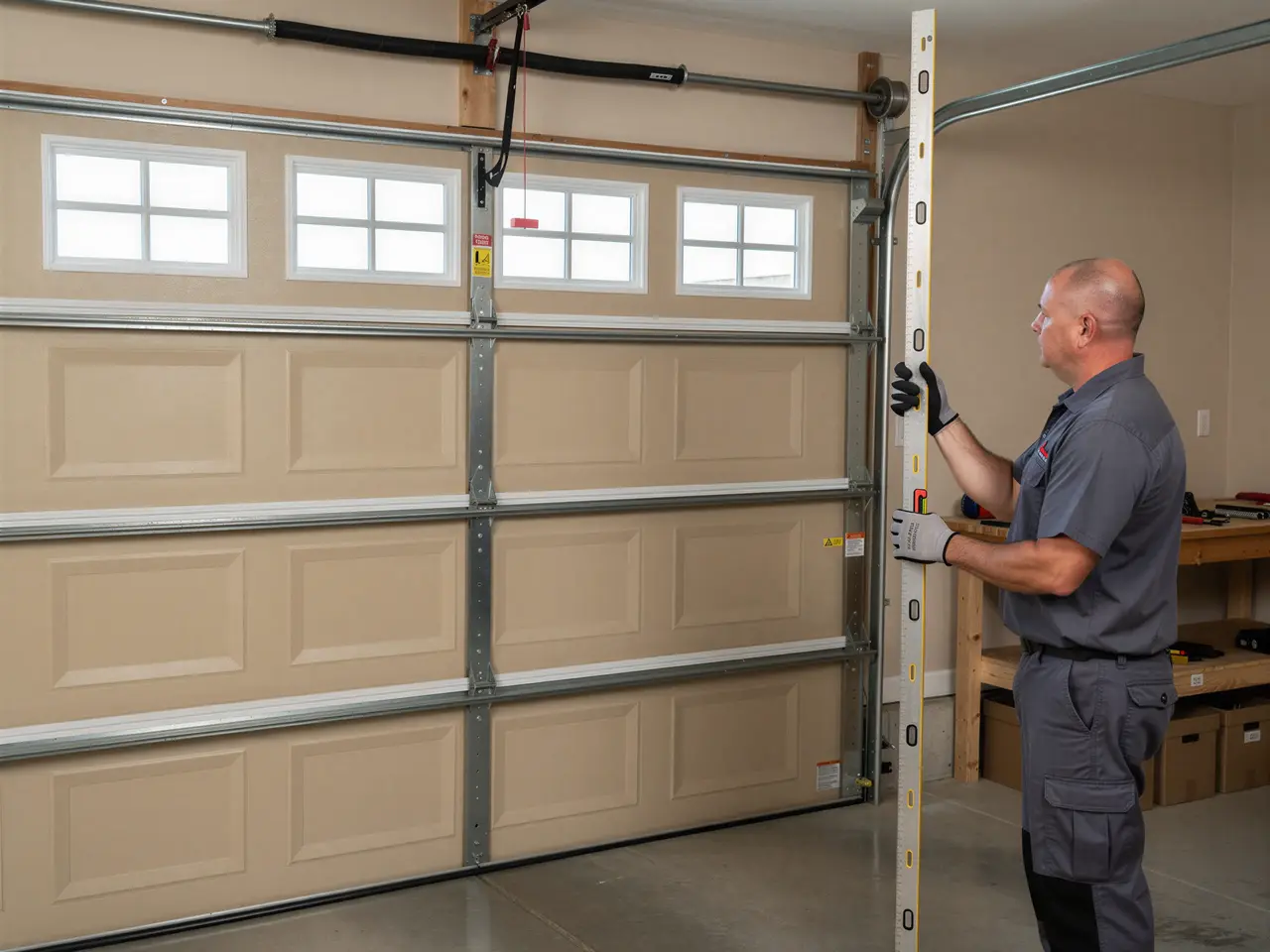
A torsion spring under tension can break a finger or worse, and that doesn't change by zip code. What does change is what you're likely to be working on. Doors installed when these Gilbertsville houses were built in the 1980s typically run torsion springs mounted on a center bracket above the opening, not the side-mounted setups common on much older stock. If you're used to internet advice written for a different hardware layout, you can end up loosening the wrong set screw or standing in the wrong spot when the bar lets go. Rollers, hinges, and the bottom weatherseal are reasonable DIY territory. The spring, the cable drums, and anything bolted to the torsion tube are not, regardless of how confident the video made it look. If the opener just needs the sensors realigned or the chain tightened, that's a fair weekend job. If the door won't move, is off its track, or the spring is visibly split, that's a call, not a project. We'd rather tell you that up front than have you find out the hard way why the warning labels on that hardware exist.
The Complications
This region sits in a severe cold climate band, and cold does specific things to a garage door that heat doesn't. Steel contracts, lubricant stiffens, and a torsion spring that's already near the end of its cycle count is more likely to snap on a sub-freezing morning than in July. On doors from the early 1980s build era common in Gilbertsville, the galvanized coating on rollers and hinges has usually thinned enough after four decades that rust takes hold faster once winter moisture gets into the track. That combination, older hardware plus hard winters, is why a door that's worked fine for years can suddenly bind or jump the track the first cold snap of the season. The complication isn't just the age of the parts, it's that cold amplifies whatever weakness was already there. A spring with a hairline fatigue crack that would last another summer can go in January instead. We size replacement springs and openers for that cold-weather load, not just for the door as it sits in a mild afternoon, because a part that passes a warm-day test can still fail the first real freeze.
How It Shows Up
On houses from this era, the complaints tend to follow a pattern. A chain-drive opener installed when the house was new starts grinding or skipping, usually because the gear inside the unit has worn down after enough winters of cold starts. Steel panels from the early 1980s show rust bubbling up from the bottom edge first, where snowmelt sits against the panel longest. Owners also call about a door that reverses for no reason, which is often the safety sensors knocked out of alignment, not a dying opener. Less often, but still regularly, it's a cable that's frayed at the drum from decades of cycles, which looks fine until the day it isn't. None of these show up overnight. They build for a season or two, and by the time the door won't open at all, the underlying part has usually been failing quietly for months. If your door has started making a new noise in the last winter or two, that's worth a look before it becomes a door that won't move at all some cold morning when you're already late.
Time on the Job
We're honest about this part: there's no branch in Gilbertsville. The truck comes from Reading, 17 miles out, which means timing on any given day depends partly on where that job falls on the route and partly on what the door needs once we're there. A spring swap or a sensor realignment is usually a same-visit fix once the truck is on site. A full door replacement, especially if you want a specific panel style or an insulated option for the cold winters here, can mean a return trip once the door itself arrives, since we don't stock every size and style on the truck. With only 2,157 households in Gilbertsville, this isn't an area with daily call volume, so we're not running a dedicated route through here the way we might in a denser part of the service area. That's not a knock on the town, it's just the honest shape of covering 58 named areas out of one hub. If timing matters for your situation, say so when you call, and we'll tell you straight whether it's a same-day fix or a two-trip job.
Why This Fails Locally
Put the pieces together and Gilbertsville's garage door problems aren't the same as Reading's. The housing here mostly dates to after 1982, a full decade or more past the median build year for the broader service area, so the hardware failing right now is center-mounted torsion springs and early chain-drive openers, not the older side-mount setups common closer to Reading's core. The severe cold winters hit that aging hardware hard regardless of where it sits, but at $117,426 median income, Gilbertsville owners are more likely to replace a worn door outright than patch it a third time, which shifts the kind of call we get here toward full-door jobs rather than small repairs. And because it's a small pocket of 2,157 households 17 miles from where the truck sits, the jobs here cluster less predictably than in denser parts of the territory. None of that is a complaint about the town. It's just why a page written for Reading's older housing stock wouldn't actually describe what's failing on a Gilbertsville garage door.
Frequently asked questions
Why does my opener from the early 1980s keep grinding instead of just failing outright?
That gradual grinding is usually a worn gear inside the opener unit, not the motor itself. Decades of cold starts wear the gear teeth down slowly, so you get noise and hesitation for months before it finally stops opening the door altogether. It's worth replacing once the grinding starts rather than waiting for a full stop.
Do you have a shop in Gilbertsville?
No. We work out of Reading, about 17 miles away, and drive to Gilbertsville for calls. That doesn't change what we can fix, but it does mean scheduling depends on the route that day, and a full door replacement may take a return trip once the new door arrives.
Is it worth replacing a door built when my house was, back in the early 1980s?
Usually yes once you're facing a second or third repair on the same door. At the income levels typical in this area, most owners find that a new insulated door built for severe cold outperforms patching 40-year-old steel and an aging opener, both in looks and in how it holds up through winter.
Why did my spring snap in the cold when it worked fine all summer?
Cold stiffens the metal and adds load right as the spring's fatigue life is running out. A spring that was already near the end of its cycle count in July can go on the first hard freeze, because winter conditions push it past the point summer weather never tested.
More garage door services in Gilbertsville
Book garage door service in Reading
Call now or request a quote - tell us what the door is doing and where you are.