
Reading, PA · Garage Door Service
Roller Replacement for Pottstown's Older Garage Doors
Pottstown's housing stock runs older than most of the Reading area, with a median build year of 1948. That means steel rollers on worn track, not the nylon kind. Here's what that job actually involves.
- Repairs & new doors
- Springs & openers
- Serving 8 nearby communities
Why This Fails Locally
Pottstown has about 9,638 households, smaller than most of the towns Reading Garage Door Pros covers, but the housing here skews older. The median year built across this part of the service area sits around 1948, two full decades ahead of the 1970 median for the broader area. That earlier build date matters for one specific reason: doors from that era were hung with steel rollers running in steel track, not the nylon rollers that showed up later. Steel-on-steel wears a groove into the track over the years, and once that groove deepens, the roller doesn't ride smooth anymore - it catches, especially where the track curves into the horizontal run near the ceiling. Add in a climate band that runs cold and severe here, and you get steel contracting in winter, grabbing at a wheel that's already worn flat on one side. This isn't a problem that shows up overnight. It's decades of the same metal rubbing the same metal, finally catching up with a door built before most of the newer stock around it went up.
Parts We Carry
For a door built mid-century, the stock roller is usually a 7-ball steel bearing on a 4-inch stem, sized for the narrower track common to that era's hardware. We carry those alongside the sealed-bearing nylon rollers most owners switch to now, since nylon runs quieter and doesn't wear the track the way steel does. Stem length matters more here than on newer builds - a lot of these doors have track brackets set closer together than current code calls for, so a roller with the wrong stem length either binds in the bracket or sits too loose to carry the panel weight evenly. We measure before we order, not after. One limitation worth saying plainly: if the track itself has worn a deep enough groove from decades of steel rollers, a new roller alone won't fix the catching - the track needs replacing too, and we'll tell you that up front rather than sell you a roller that'll still bind in six months.
How to Book
Reading Garage Door Pros doesn't keep a branch in Pottstown - the truck comes out from Reading, about 16 miles west. That distance doesn't change what gets fixed once we're on site, but it does mean we schedule the visit rather than drop by on a whim, so booking ahead gets you a tighter window than calling same-morning. Start on the Pottstown service page to see what else we handle in this part of the coverage area, or go straight to the roller replacement page for Reading if you want the broader rundown on how the job works before you call. Either way, have the door's approximate age and whether it's single or double ready - it speeds up the parts decision before the truck even leaves.
What the Fix Involves
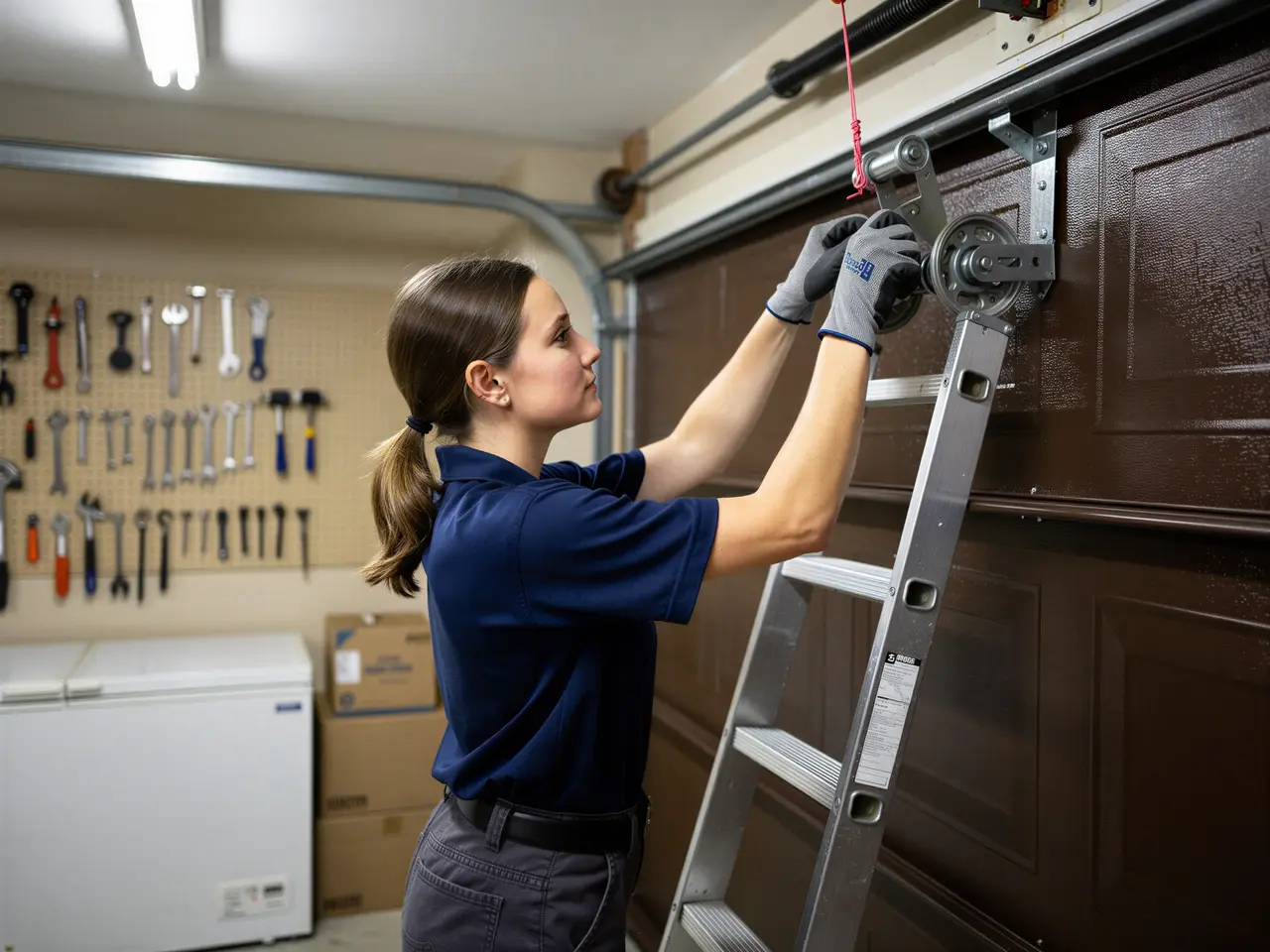
We pull the door down to about waist height and secure it so it can't drop while the track is open. Each roller comes out one at a time - stem out of the bracket, bearing clear of the track - so the door never loses more than one point of support at once. On a door this age, at least a few rollers usually come out bent or flat-sided rather than round, which tells us how long the wear has been building. We check the track alignment at the same time, since a groove-worn track will chew through a brand-new roller just as fast as it did the old one if the alignment's off. Rollers go back in with the stem seated fully in the bracket, not just resting against it - a half-seated stem is one of the more common comebacks we see on older hardware. Once all of them are in, we run the door through a full cycle by hand before touching the opener, listening for any catch point we might have missed.
How It Shows Up
On a door from this era, the roller problem usually announces itself as a grinding or grating sound right where the track bends from vertical to horizontal - that's the curve where a worn steel roller has the least room to flex. Some owners notice the door jumping slightly in the track on the way up, a small jolt rather than a smooth glide. In the colder months, which run harder here given the climate band this area sits in, that catching gets worse before it gets better - metal contracts, clearances tighten, and a roller that was barely making it through in October starts binding hard by January. If you're hearing it only on the first open of a cold morning and it smooths out after a few cycles, that's often the earliest sign, well before the roller fails outright.
The Complications
The complication on older Pottstown stock isn't usually the roller itself - it's what the roller has been quietly wearing on. A track that's run steel rollers for most of its life develops a groove that a new roller, steel or nylon, will eventually fall into the same way. We won't sell a roller swap on a track that's past that point; it's a short-term fix on a long-term problem, and we'll say so. The other complication is bracket spacing. Some of this era's doors have horizontal track brackets set tighter than current builds, which limits which roller stem lengths actually fit without modifying the bracket - not every roller on the shelf works on every door this age, and guessing wrong means a second trip.
Frequently asked questions
Why do my rollers wear out faster than my neighbor's newer garage?
If your house dates to around the late 1940s, which is typical for this part of Pottstown, your door likely still runs steel rollers in steel track. That combination wears faster than the nylon-roller setups common on houses built later, since metal grinding on metal cuts a groove into the track over time.
Do you have a branch in Pottstown?
No. Reading Garage Door Pros works out of Reading, about 16 miles away, and schedules Pottstown visits rather than running same-day drop-ins. Booking ahead gets you a tighter appointment window than a same-morning call.
Can you just replace the rollers without touching the track?
Usually, yes. But if decades of steel rollers have worn a visible groove into the track, a new roller will eventually bind the same way the old one did. We check the track during the same visit and tell you honestly if it needs attention too.
Will my door sound different after the roller swap?
If you switch from steel to sealed nylon rollers, yes - noticeably quieter, especially at the curve where the track bends from vertical to horizontal. That's usually the loudest point on an older door with worn steel rollers.
Book garage door service in Reading
Call now or request a quote - tell us what the door is doing and where you are.