
Reading, PA · Garage Door Service
What a Reading, PA Technician Checks First on an Older Door
Reading, PA homes mostly date to the 1960s-70s with originals from 1938-2003; a technician checks hardware age and cold-climate wear before any repair quote.
- Repairs & new doors
- Springs & openers
- Serving 8 nearby communities
What to Look At First
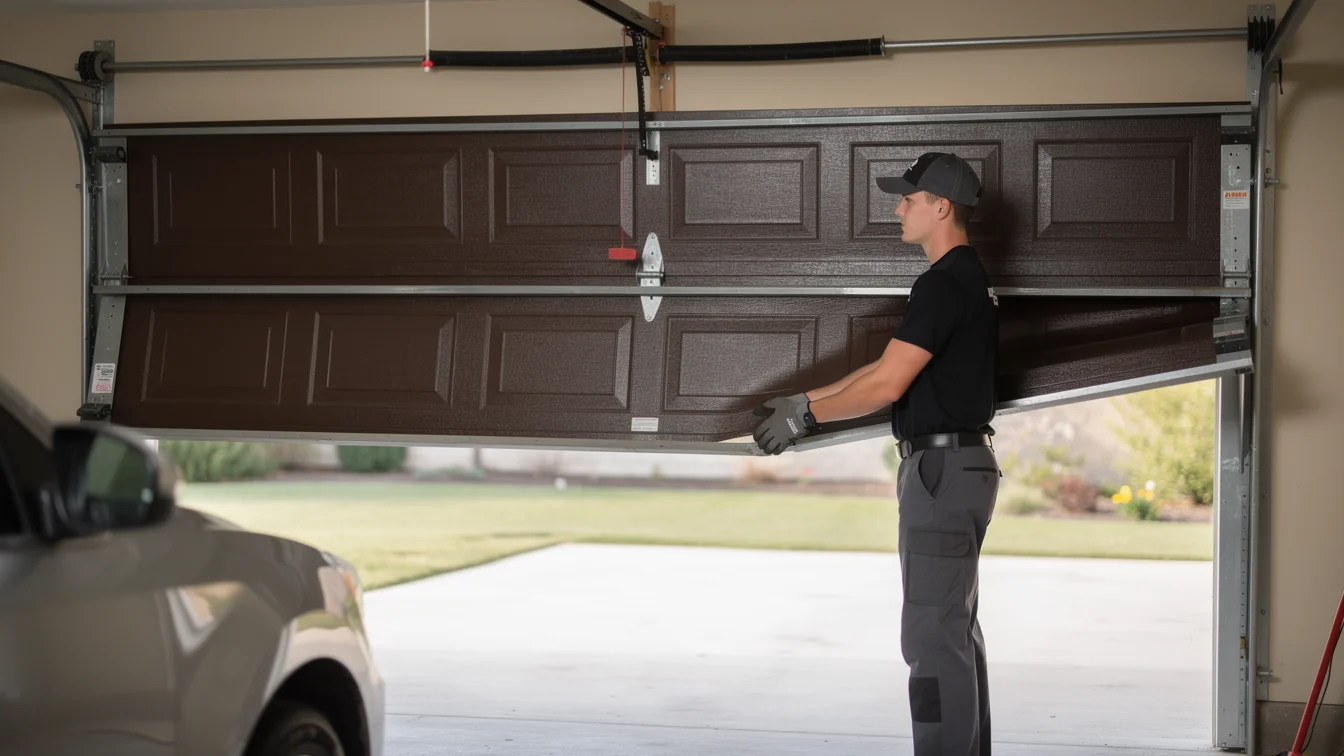
On a service call in the Reading area, the first thing a technician does is figure out what decade the door and hardware actually came from. Housing here runs from 1938 up through 2003, with the median closer to 1970, so the odds are good the door in front of us is original steel or an early replacement from that stretch. That means checking the bottom bracket for rust-through, the hinges for elongated screw holes, and the track for the kind of slow bend that comes from decades of a slightly-off roller rather than one bad hit. We also look at the spring type - a lot of houses from that build era still run extension springs instead of torsion, and the two don't swap parts. Cold weather in this part of Pennsylvania stiffens old grease and makes a marginal spring finally let go, so we check lubrication and listen for the grinding that means a bearing is dry. None of this takes long, but skipping it means quoting a repair on a door we haven't actually looked at, which is how you end up back at the house a second time.
The Situation
Across the service area there are roughly 89,740 households, and 36,624 of those are owner-occupied houses - the group most likely to be living with the original door that came with the place. Median household income here is $85,952, which is enough that most owners choose to fix a door right rather than bolt on a cheap stopgap, but it doesn't mean every job needs a full replacement. A lot of the housing stock clustered in the 1960s and 70s means a lot of garages built to the same basic specs: single-car openings, lighter headers, hardware sized for the doors of that decade rather than today's heavier insulated panels. When someone upgrades to a thicker door now, the opener and track sometimes need upgrading too, because the original setup wasn't built for the extra weight. That mismatch - new door, old bones - is one of the more common things we run into on these older Reading-area houses, and it's worth catching before the installation, not after.
When to Get Help
Call before the door fails completely, not after. A spring that's starting to sag or a cable that's fraying will usually give some warning - a loud bang, a door that won't stay up, an opener that strains and reverses. Those are the moments to get a technician out, not wait and see. One honest limit: if the track is bent badly enough that it won't hold alignment after a straightening, we replace the section instead of trying to save it - bent track is one of the few parts we won't keep bending back, because it just fails again under load. On a house with original hardware from the 1960s or 70s, that's often the actual problem hiding behind a symptom that looks like a bad spring. If your door is sticking, dropping unevenly, or the opener strains on one side more than the other, that's a track or roller issue, not something to grease and ignore through another cold winter.
What Local Conditions Do
Reading sits in a climate band rated cold and severe, and that matters more to a garage door than people expect. Steel contracts in the cold, which tightens tolerances on an old track and makes a marginal roller bind instead of roll. Grease that was fine in summer turns stiff by January, which is why doors that worked fine in October suddenly strain the opener in February. Weatherstripping on a door installed when the neighborhood was built - likely sometime in that 1938-2003 run - has usually hardened and cracked by now, letting cold air and moisture into the bottom seal, which speeds up rust on brackets and hinges. None of this is dramatic, it's just steady wear that moves faster here than it would in a milder climate. A door that's twenty-plus years past its install date, sitting in a cold-severe zone, is doing more work to stay functional than most owners realize until something finally gives.
Frequently asked questions
How old is the hardware on a typical Reading-area garage door?
Most of the housing in this area went up between 1938 and 2003, with the bulk clustered in the 1960s and 70s, so a lot of original hardware - brackets, hinges, even extension springs - is from that era. We check the actual parts on site rather than assume, since repair options differ based on what's installed.
Does the cold affect my garage door opener too?
Yes. Reading's climate is rated cold and severe, and stiff grease combined with contracted metal parts makes an opener work harder in winter. If your opener strains more in January than it did in October, that's usually the cold interacting with aging hardware, not a sign the opener itself is failing.
Is it worth replacing an original door from the 1960s or 70s?
Often yes, especially since median income in this area is high enough that most owners go for a proper fix. But we only recommend replacement when the hardware or panel damage actually warrants it - a door that just needs a spring and a bracket doesn't need a full swap.
Will you straighten a bent track instead of replacing it?
Sometimes, but not always. If the bend is minor we can realign it. If it's bad enough that it won't hold alignment under load, we replace that section rather than keep adjusting it - a track that keeps slipping back out of true isn't worth the extra service calls.
Related garage door services in Reading
More garage door guides
Book garage door service in Reading
Call now or request a quote - tell us what the door is doing and where you are.