
Reading, PA · Garage Door Service
Stopping Drafts Through Your Reading Garage Door
Reading homes built between 1938 and 2003 lose heat through old garage door seals. Here's what to check first in this cold-climate housing stock before winter.
- Repairs & new doors
- Springs & openers
- Serving 8 nearby communities
What to Look At First
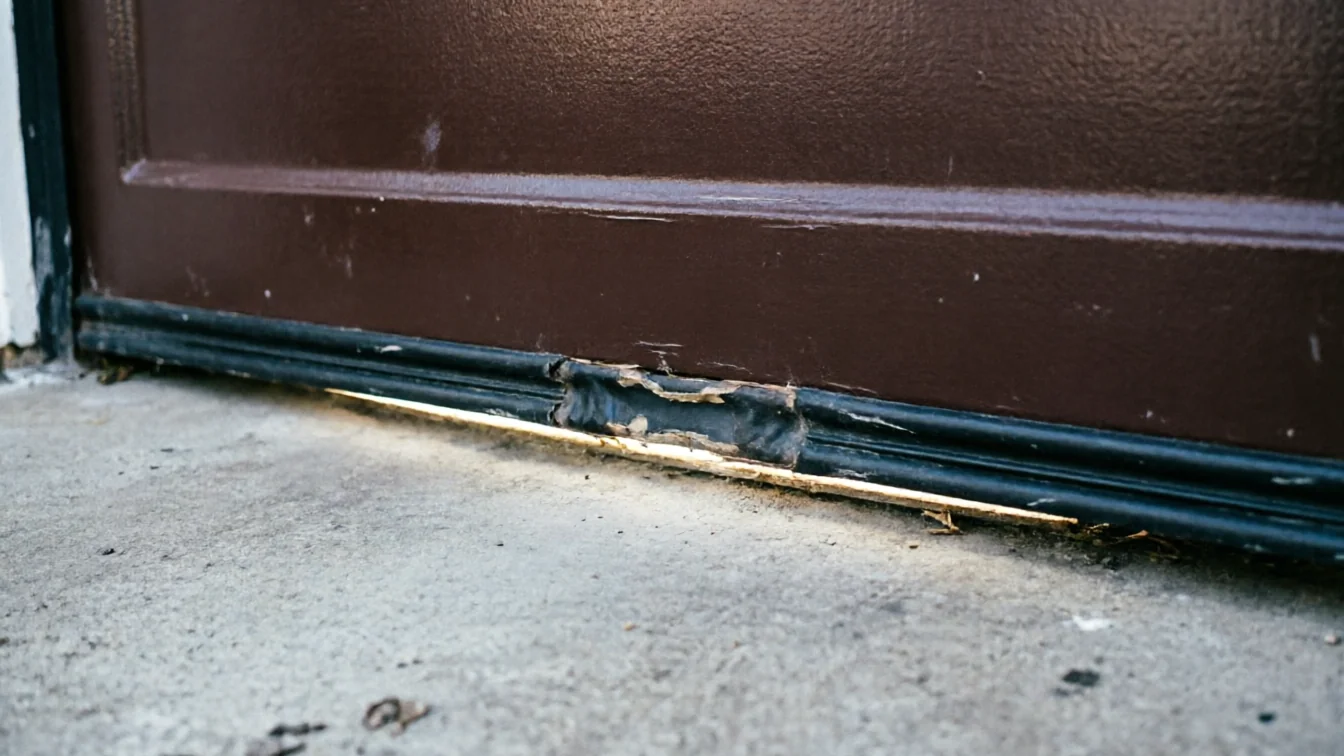
Start at the bottom. On houses built in the 1960s and 70s - the era that makes up most of the stock across Reading's 58 named areas - the original bottom seal is usually a thin vinyl bead set into an aluminum retainer that was never meant to last fifty years. Run your hand along the floor on a cold morning. If you feel air moving under the door even with it fully closed, the seal has hardened and shrunk, or the slab has sagged enough that the seal no longer meets the floor evenly.
Next check the side and top stop molding, where the door meets the frame. Houses in this housing band (1938 to 2003, median build year 1970) often have jambs that have shifted slightly over sixty-plus years, which opens a gap you can see daylight through even when the door looks shut.
Finally look at the panel joints themselves, especially on steel doors from the 1980s and 90s. Foam-backed panels from that period compress at the joint over time, and that's a different fix than a seal replacement - sometimes it means the door, not just the seals, is done.
This isn't a five-minute glance. Take a flashlight into the garage at night and see where it shows through from outside.
The Situation
Reading sits in a cold-climate band with severe winter exposure, and a garage that leaks air doesn't just feel uncomfortable - it pulls heat out of anything stored against the shared wall, and on attached garages that's often a bedroom or laundry room wall. Across roughly 36,624 owner-occupied houses in the service area, a large share were built before weatherization standards tightened, so the seals installed at construction were adequate for that decade's codes, not for today's.
The practical problem is that older bottom seals were sized for door bottoms that have since worn or warped slightly, so a seal that was correct in 1975 doesn't necessarily match the gap that exists now. Buying the same part number doesn't fix a door whose bottom edge has bowed.
We also see this a lot on homes near the edges of the 1938-2003 build range - either very old slabs with wood jambs that have racked out of square, or newer builds where the seal track itself has started to pull away from the frame. Both situations look like "just replace the seal" from the driveway, but the fix depends on which decade the door and framing actually date to.
When to Get Help
If the draft is coming from the bottom seal alone and the door still sits flat and level, that's a straightforward seal swap - cheap, fast, and something a lot of owners handle themselves. We won't talk you into a truck roll for that.
Call when the gap is uneven side to side, when the door doesn't sit flush even after a new seal goes in, or when you can see the stop molding separated from the jamb by more than a sliver. Those point to a framing or track alignment issue that a new seal won't solve, and pushing a thicker seal into a misaligned door just means it tears again in a season.
Also worth a call if the garage is attached and you're losing noticeable heat through it in a severe winter climate like this one - sealing the door is cheap compared to what a cold garage does to an adjoining wall over a full winter. We'll look at the seal, the bottom astragal, and the weatherstripping along the jamb together, because on houses from this build era they tend to fail as a set, not one at a time.
What Local Conditions Do
Severe cold does two things to a garage door that moderate climates don't see as much. First, vinyl and rubber seals get stiff and crack faster - a seal that's pliable in October can be brittle and gapping by February, which is why a seal that looked fine at fall inspection can be leaking by midwinter. Second, repeated freeze-thaw cycles shift concrete slabs slightly, which changes the gap at the bottom of the door year to year even if nothing about the door itself has changed.
That's a real factor on the older end of Reading's housing stock, where slabs poured decades ago have had more freeze-thaw cycles to move through. It means a seal that fit perfectly three winters ago might not fit now, independent of wear on the rubber itself.
One honest limitation: we can replace seals and adjust tracks, but we can't level a slab that's heaved or settled unevenly - that's concrete work, not garage door work, and it's worth knowing before you call us about a gap that keeps coming back no matter how many times the seal gets swapped.
Frequently asked questions
How often do garage door seals need replacing in Reading's climate?
There's no fixed schedule we can give you without seeing the door, but in a cold, severe-winter climate like this one, vinyl bottom seals typically harden and crack faster than they would somewhere milder. If you're noticing a draft every winter, check it before the cold sets in rather than after.
My house was built in the 1960s - is the seal gap normal for the age?
It's common. Houses from that era across Reading's older neighborhoods often have jambs that have shifted slightly over the decades, which opens a gap that a new seal alone won't close. If the gap is uneven side to side, that's a framing issue, not just a worn seal.
Can I just caulk around the door to stop the draft?
Caulk around the frame can help with the stop molding gap, but it won't fix a worn bottom seal or a door that doesn't sit flat on the slab. Treat caulking as a small supplement, not the fix, especially on older framing.
Is it worth replacing the whole door just to stop a draft?
Usually not, if the panels and track are otherwise sound. Seal and astragal replacement handles most draft problems on doors from the 1960s through 1990s. Full replacement makes sense when the panels themselves have warped or the foam backing has broken down.
Related garage door services in Reading
More garage door guides
Book garage door service in Reading
Call now or request a quote - tell us what the door is doing and where you are.