
Reading, PA · Garage Door Service
Roller Replacement for Wyomissing Garage Doors
Wyomissing homes built around 1969 run steel rollers on narrow tracks that wear fast. See what roller replacement costs here and when it beats a full door swap.
- Repairs & new doors
- Springs & openers
- Serving 8 nearby communities
What It Costs
Wyomissing sits on a median household income of $88,214, a notch above the wider Reading service area. That matters here because it changes where the repair-or-replace line falls. On a door that's otherwise sound, swapping a full set of rollers is a small job next to a new door and opener, and most owners in this income bracket choose to fix rather than replace once they hear the numbers side by side. The math shifts once the track itself is bent or the door panels are rusted through - at that point you're paying for rollers twice, once now and once when the real problem shows up. We don't carry every roller size on the truck for every job; some of the sealed-bearing styles used on heavier insulated doors need to be ordered, and we'll tell you straight if that's the case before we start. A roller job on a single door is a different bill than a double, and we price it after we see the track wear in person, not over the phone.
How to Book
We run out of Reading, about 2 miles from Wyomissing, so getting a truck to you isn't the issue - scheduling around when your door is actually usable is. If the door still opens and closes but sounds like gravel in a can, that's a roller job you can wait a few days on. If it's binding in the track or jumping off the rail, don't keep running the opener against it; that's how a roller problem turns into a track replacement. Tell us which it is when you call and we'll sort the order accordingly. We work the whole area covered from Reading, and Wyomissing jobs get scheduled the same way as the rest - first by urgency, then by route.
The DIY Question
Rollers look like the one garage door part a reasonably handy homeowner could swap out alone, and on some doors that's true. The catch in Wyomissing is the age of the housing stock - a lot of these doors date to the 1960s and 70s, median build year 1969, and that generation of door often runs on tracks that have shifted slightly over fifty-plus years of use. Pull the old rollers on a door like that and you can find the new ones won't seat right because the track itself isn't square anymore. That's not a roller problem, it's a track problem wearing a roller problem's clothes. If your door is newer and the track still reads true, a careful owner can do this with the door unplugged and the springs left alone. If you're not sure which situation you're in, that uncertainty alone is worth a call before you take panels apart.
Why This Fails Locally
The housing stock across this part of the service area runs 1938 to 2003 with a median build year of 1970, and Wyomissing's own median sits right at 1969 - a near match. Doors from that era were built with steel rollers on steel tracks, no nylon, no sealed bearings, and after decades of a cold-climate winter cycle the steel wears a groove into itself. You hear it before you see it: a rough, uneven grind instead of a smooth roll. Add in that this is a severe cold-climate band, and the grease in those old roller bearings thickens up every winter, which speeds the wear further. This isn't a problem unique to one house - it's what happens to a door built to a 1960s-70s spec after fifty-some winters, and it shows up across a lot of these 5,062 households the same way.
What the Fix Involves
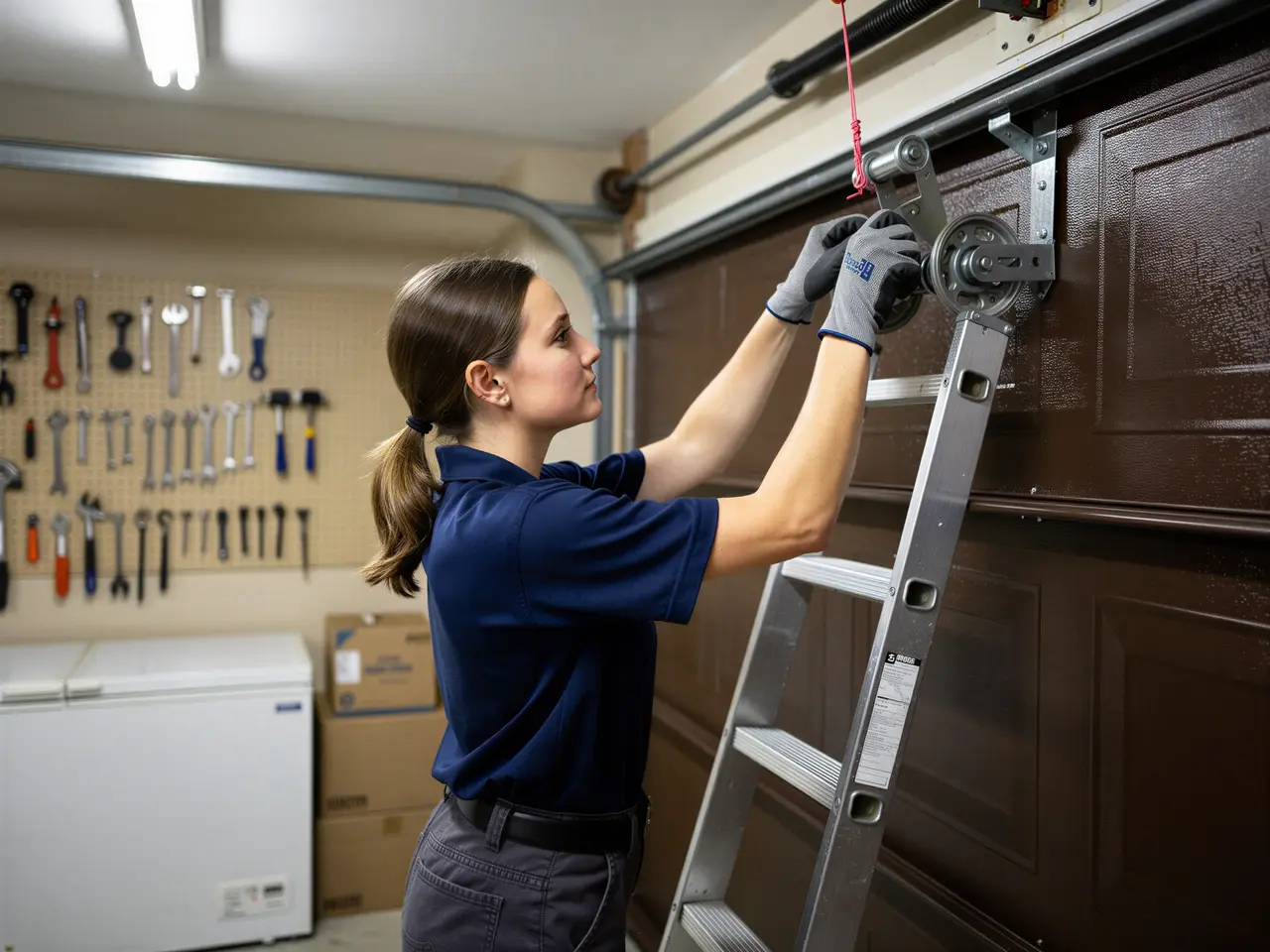
We pull the door down to where the rollers seat, check the track alignment along its full run, and replace the rollers as a set rather than one at a time - mixing old and new wear patterns on the same track just creates a new noise six months later. On the older steel-track doors common to this area's 1960s-70s build era, that often means swapping to a sealed-bearing roller that won't need re-lubricating every winter, which matters given the cold-climate exposure here. We test the door through a full open-close cycle under power, not just by hand, since a rough spot sometimes only shows up under the opener's pull. If the track is bent rather than just worn, we'll say so - a new set of rollers on a bent track buys you a few months, not a fix.
Frequently asked questions
How do I know if it's the rollers and not the opener?
If the noise happens while the door is moving and gets louder in certain spots along the track, that's usually rollers. If the noise is at the motor itself, or the door hesitates before it even starts moving, that points to the opener instead. We'll check both when we come out.
Will my older steel-track door need anything besides rollers?
Sometimes. Doors built in the 1960s-70s era common to Wyomissing often have tracks that have shifted slightly over the decades. If the track isn't square, new rollers alone won't fix the grind - we'll flag that before swapping parts.
Can I wait on this until spring?
If the door still opens smoothly and the noise is just louder than it should be, yes. In a severe cold-climate winter, thickened grease in old roller bearings tends to make things worse, not better, so waiting usually means a louder door by March, not a fixed one.
More garage door services in Wyomissing
Book garage door service in Reading
Call now or request a quote - tell us what the door is doing and where you are.