
Reading, PA · Garage Door Service
Why a Door Jumps Its Track in Reading Houses
Reading homes built mostly in the 1960s and 70s have track hardware that wasn't made for today's loads or our cold winters. Here's what to check before you call.
- Repairs & new doors
- Springs & openers
- Serving 8 nearby communities
What to Look At First
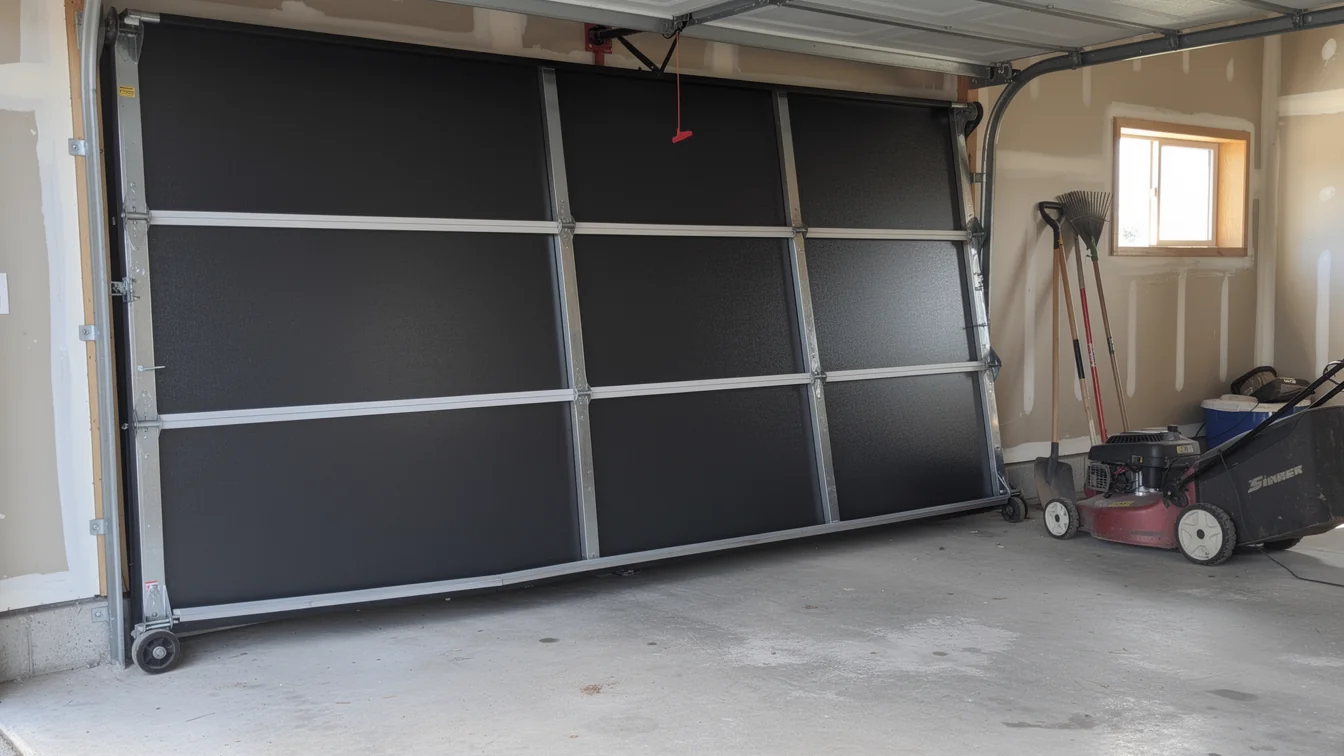
Start at the rollers. In a lot of the houses around Reading, built between 1938 and 2003 with the bulk going up in the 1960s and 70s, the original track brackets are stamped steel, not the heavier galvanized stock you'd spec today. Over fifty-some years those brackets loosen at the lag bolts, and the track flares outward at the bottom section just enough that a roller walks out of the channel on the next cold morning.
Look for a gap between the roller and the track wall, a wavy line where the track meets the wall bracket, or fresh paint scuffed off the inside of the rail. If the door is binding on one side only, check whether that side's vertical track is still plumb - on older jamb framing it often isn't anymore, not because the door failed but because the house settled around it.
Don't skip the bottom bracket where the cable anchors. On doors that have never been serviced, that bracket is usually the first thing to work loose, and a loose bottom bracket pulls the whole panel stack sideways under tension.
This is a five-minute look with a flashlight, not a repair. If anything moves when you push on it by hand, stop there.
The Situation
Reading sits in a cold-severe climate band, and that matters for track alignment more than most homeowners think. Steel track contracts in hard cold, and on an older house where the track was leveled and shimmed decades ago, that contraction is enough to open a hairline gap at every bracket joint. Add a few freeze-thaw cycles each winter and those joints work a little looser every year.
Across the service area, most of the stock is still that 1960s-70s build - single-car and two-car garages framed to the standards of the day, with wood jambs that flex more than the steel-reinforced openings built since. A door that's slightly out of square on one of these openings won't show it in summer, but once the cold sets in and the track metal shrinks, the rollers find the weak spot fast.
We see this pattern on a lot of calls: nothing broke, nothing was hit, the door just slowly walked itself off true as the house and the hardware aged in different directions.
When to Get Help
Call before you try to force the door back onto the track yourself. A door under spring tension that's already partway off the rail can come down hard, and on the older torsion setups common in houses from this era, the spring is doing more work than it looks like.
Get it looked at soon if the door only comes off track on one side every time, if you hear a bang right before it happens, or if the bottom bracket has visibly pulled away from the panel. Those point to a bracket or roller failure, not just a knock out of alignment, and running the opener on it again risks bending the track permanently.
If it's an isolated event - the door caught on something once and popped a roller - that's often a same-visit fix: reset the roller, true up the bracket, check the track screws. We won't push a full track replacement on a door that just needs the hardware tightened, but if the track itself is bent rather than just loose, straightening it rarely holds for long and replacing that section is the honest answer.
What Local Conditions Do
With 36,624 owner-occupied houses across the area and most of them built decades before today's track and roller standards, this is one of the most common calls we get once the weather turns. Household income here runs a median of $85,952, which is enough that most owners replace rather than keep patching a track that's failed more than once - but plenty of houses still have the original 1970s-era hardware simply because nobody noticed it needed attention until a roller finally let go.
The honest limit here: we can true up a track and tighten brackets on most calls, but if the jamb itself has shifted out of square - common enough in houses this old - no amount of track adjustment fixes that permanently. At some point the fix is reframing the opening, and that's a carpentry job, not a garage door one.
Frequently asked questions
Why does my garage door only come off the track in winter?
Steel track contracts in cold weather, and on older houses with original 1960s-70s hardware, the brackets have usually loosened enough over the years that the contraction opens a gap at the joint. The door rides fine most of the year and then pops a roller on the first hard freeze.
Is a door off its track always a safety issue?
Not always, but treat it as one until it's checked. A door partway off the rail is still under spring tension, and on older torsion setups common in this area, forcing it back on yourself risks the door dropping or the track bending further.
Can the track just be adjusted, or does it need replacing?
If the track is loose but straight, tightening the brackets usually holds. If the track itself is bent, straightening rarely lasts - replacing that section is the more honest fix, especially on a door that's already come off once.
Related garage door services in Reading
More garage door guides
Book garage door service in Reading
Call now or request a quote - tell us what the door is doing and where you are.